On August 24, the “New Voices in Chinese Literature” series opened in Changchun as part of the 21st China Changchun Film Festival. That afternoon, the second “New Voices in Chinese Literature: Face to Face” event was held at Jilin Animation Institute. With this year’s festival theme, “A New Era, A New Cradle, New Voices,” at its heart, the event celebrated Changchun’s legacy as the “cradle of New China’s cinema.”
The event was guided by the China Writers Association and the Publicity Department of the CPC Jilin Provincial Committee, organized by the Jilin Provincial Writers Association, the Social Liaison Department of the China Writers Association, and the Publicity Department of the CPC Changchun Municipal Committee, and hosted by Jilin Animation Institute. It aimed to build a bridge between literature and screen media, encourage collaboration across the two fields, and support the growth of young filmmakers by bringing literary inspiration to screen storytelling and connecting creative work with the spirit of the times.
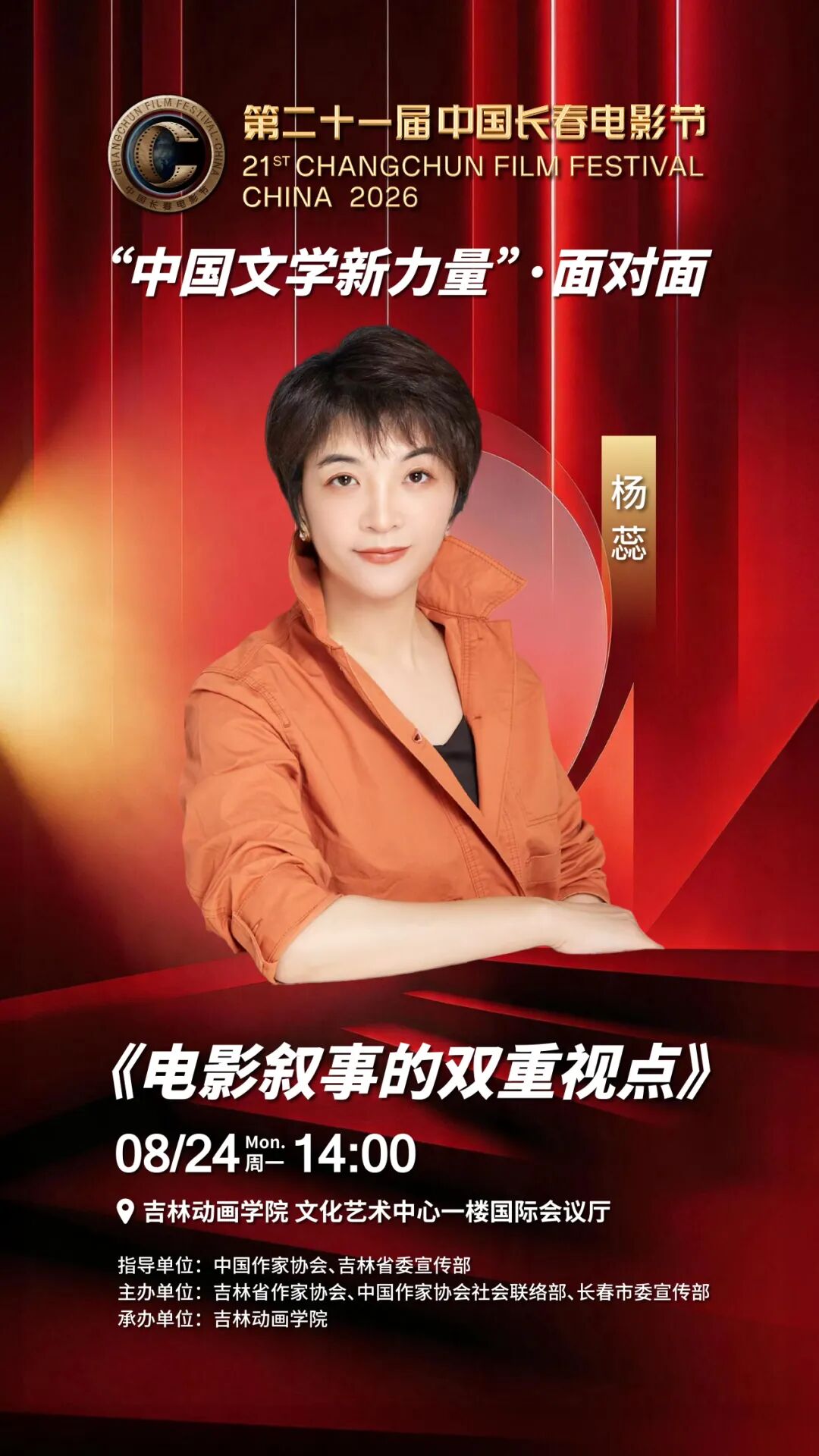
Yang Rui Gives a Special Lecture
Yang Rui, Associate Professor in the Department of Literature at the Beijing Film Academy, master’s supervisor, and Director of its Screenwriting Teaching and Research Office, delivered a lecture at Jilin Animation Institute. Li Meng, an editor at the Online Literature Center of the Jilin Provincial Writers Association, hosted the event. Xiao Jing, head of the Center; Liu Zhenhua, Executive President of Jilin Animation Institute; and faculty and student representatives from the School of Film and the School of Animation Arts also attended.
Titled “The Dual Perspectives of Film Narrative,” Yang’s lecture traced the origins of storytelling and explored creative challenges in the age of AI, conflict and suspense, and the interplay between the logic of fate and individual experience. She also spoke with faculty and students in an extended discussion.
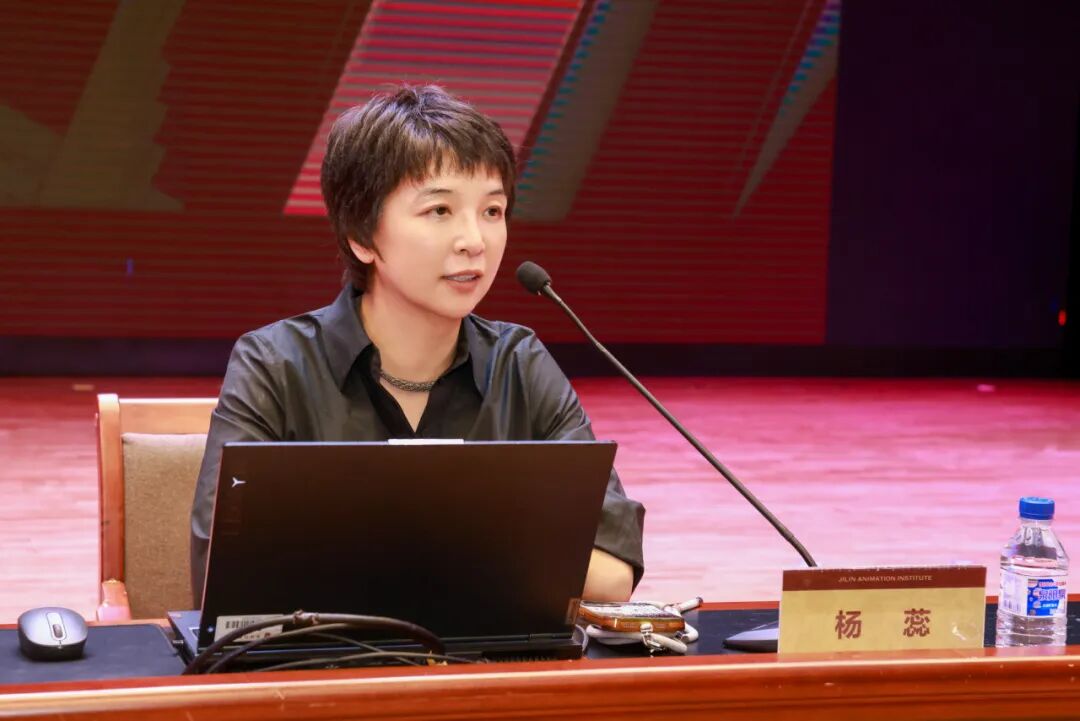
“If You Cannot Master AI, AI May Master You”
Reflecting on the rapid development of AI and the changes brought about by micro-dramas, Yang said these are questions facing creators around the world. In her view, AI has lowered barriers to entry and made creative tools more accessible—a positive development. But amid the excitement around technology, creators must return to the fundamentals.
Film, she said, takes flight from the foundations of drama, whose roots lie in literature. The conventions of genre cinema are patterns tested by audiences over centuries. A compelling story often gives new life to familiar forms. To recognize what makes a story work, creators need to study these conventions—but not simply reproduce them. They should understand how each convention came about and the human experience it expresses.
When working with AI, creators must first strengthen their own perspectives, grounded in a genuine understanding of the world. “If you cannot master AI, you may end up being mastered by it. If you cannot surpass it, AI may push you out of the field of film storytelling. Whatever direction technology takes, it is human emotion that moves people.”
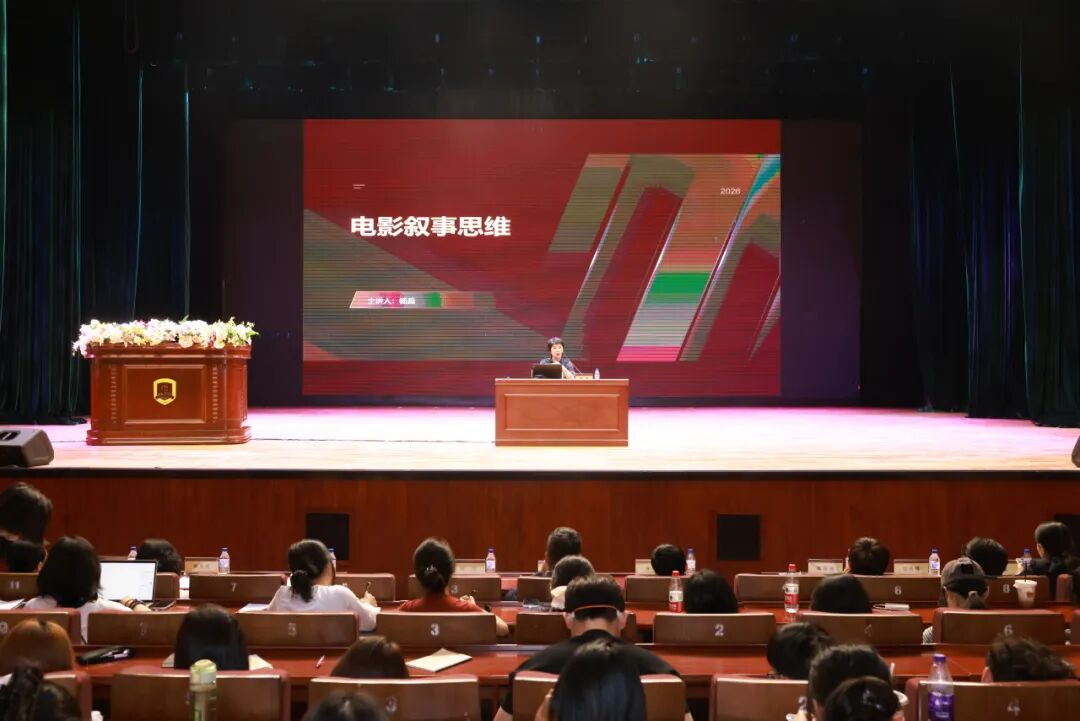
“The World of a Story Reflects the Real World”
Yang traced the origins of narrative art to the cave paintings at Lascaux, created around 17,000 years ago. Human beings, she said, are small in the face of fear, and stories have long offered a source of spiritual strength. Early audiences gathered by torchlight in caves to experience stories together. The impulse remains much the same today, whether people are watching films in cinemas or short dramas with scrolling comments.
From myths and epics to ancient Greek drama and modern cinema, the essence of storytelling has endured. “The world of a story reflects the real world, and conflict is the fundamental force that helps explain how the universe works.”
Drawing on Christopher Nolan’s film The Odyssey, Yang discussed how classical works can remain relevant across historical periods. She also used the stage production Goodbye Mr. Loser, refined over a decade, to illustrate the energy created through the live exchange between performers and audiences. Whether epic or dramatic, she said, a great film gives people strength. “Conflict creates power. Without death, there can be no rebirth—and that is what keeps stories alive.”
“The Unexpected Has a Small Face;
What Feels Inevitable Has a Great Face”
Yang introduced the idea of “dual perspectives” through an image from an ancient Hebrew text: a great face and a small face. The great face represents silence and overwhelming destructive force—the logic of fate that hangs over a story. The small face represents the joys and sorrows of individual lives, the first note in the universe.
She invoked the saying “Heaven and Earth are not humane; they treat all things as straw dogs” to explain the inevitability of fate, and analyzed Thanos in The Avengers as a character driven by a cosmic rationale. She also discussed Rose’s growth in Titanic, showing how an individual can find a way forward under the pressure of fate.
The story world, Yang explained, is a field of forces that does not bend to human will. A story draws its dramatic tension from the struggle between the logic of fate and individual effort. “The unexpected has a small face; what feels inevitable has a great face. Together, the great face and the small face create what we call drama.”
Yang reminded students that many powerful stories contain foreshadowing that proves prophetic: what seems accidental may conceal the inevitable. Audiences keep watching because stories make them feel uncertainty and unease. “The safer you make the audience feel, the more likely the story is to fail.”
“A Story First Speaks to the Senses”
Yang said stories first affect the senses and only then reach the soul. “Stories are not that complicated. First, they make us laugh, cry, or feel our hearts race.”
She used what she called the “ripple theory” to outline five layers of conflict in a story, moving outward from an individual’s inner struggle to family relationships, broader social ethics, natural and historical forces, and finally the logic of fate. Together, these layers form a basic framework for storytelling.
Using mathematician John Nash in A Beautiful Mind, Yang showed how coming to terms with hardship can itself be a form of growth. She also discussed the recurring fate of the third-generation godfather in The Godfather, examining how powerful forces shape the characters’ lives.Yang encouraged young creators to feel the urge not only to write a story, but also to tell and perform it. Writers should be bold in shaping the lives of their characters: “The screenwriter is the creator of the story world.”On the difference between animation and live-action film, Yang said their narrative foundations are much the same. Animation, however, opens up greater possibilities for moving across time and space and for giving imagination free rein. “People remain the most important. We are the source of emotion and the source of art.”
“AI Cannot Understand Your Pain”
During the question-and-answer session, Yang responded to questions about how animated films can learn from live-action storytelling and how screenwriters can balance the two perspectives. She drew on works including Chang’an, Million Dollar Baby, and Macbeth.Speaking about the “Bring in the Wine” sequence in Chang’an, she said that the pain Li Bai feels is something AI cannot truly produce. “AI cannot understand your pain. It can only imitate—it imitates emotion and pain.”She also used the two versions of events in Life of Pi to discuss reversals of fortune. Yang encouraged students to look beyond everyday details and develop a broader perspective on the forces that shape people’s lives regardless of their wishes.Her message to JAI students was that the fundamentals of storytelling endure, even as technology changes rapidly. Creators need to strengthen their sense of self and stay rooted in lived experience. “Make yourself someone irreplaceable, someone full of life. That is how you can bring genuine cultural confidence to your future creative work.”
Connecting Literature and the Moving Image
The event brought literature and screen storytelling into close dialogue and offered an opportunity to pass on artistic experience and the spirit of the times. As an institution committed to an integrated model of education, research, and industry, Jilin Animation Institute focuses on developing highly skilled, practice-oriented talent for the cultural and creative industries. It uses leading industry projects to inform teaching and strengthens emerging interdisciplinary fields that combine the arts with advanced technology.Through its “Education+” approach, the Institute is building a new ecosystem for developing versatile talent, where professional expertise informs creative work on campus and the spirit of the times inspires new screen stories.The Institute hopes the lecture will help students appreciate both the sweep of history and the warmth of everyday lives. By drawing on real experience, deepening their grounding in literature, and refining their visual storytelling, students can continue creating at the intersection of literature and film—telling the stories of their time through the moving image and sharing the energy of youth through art.