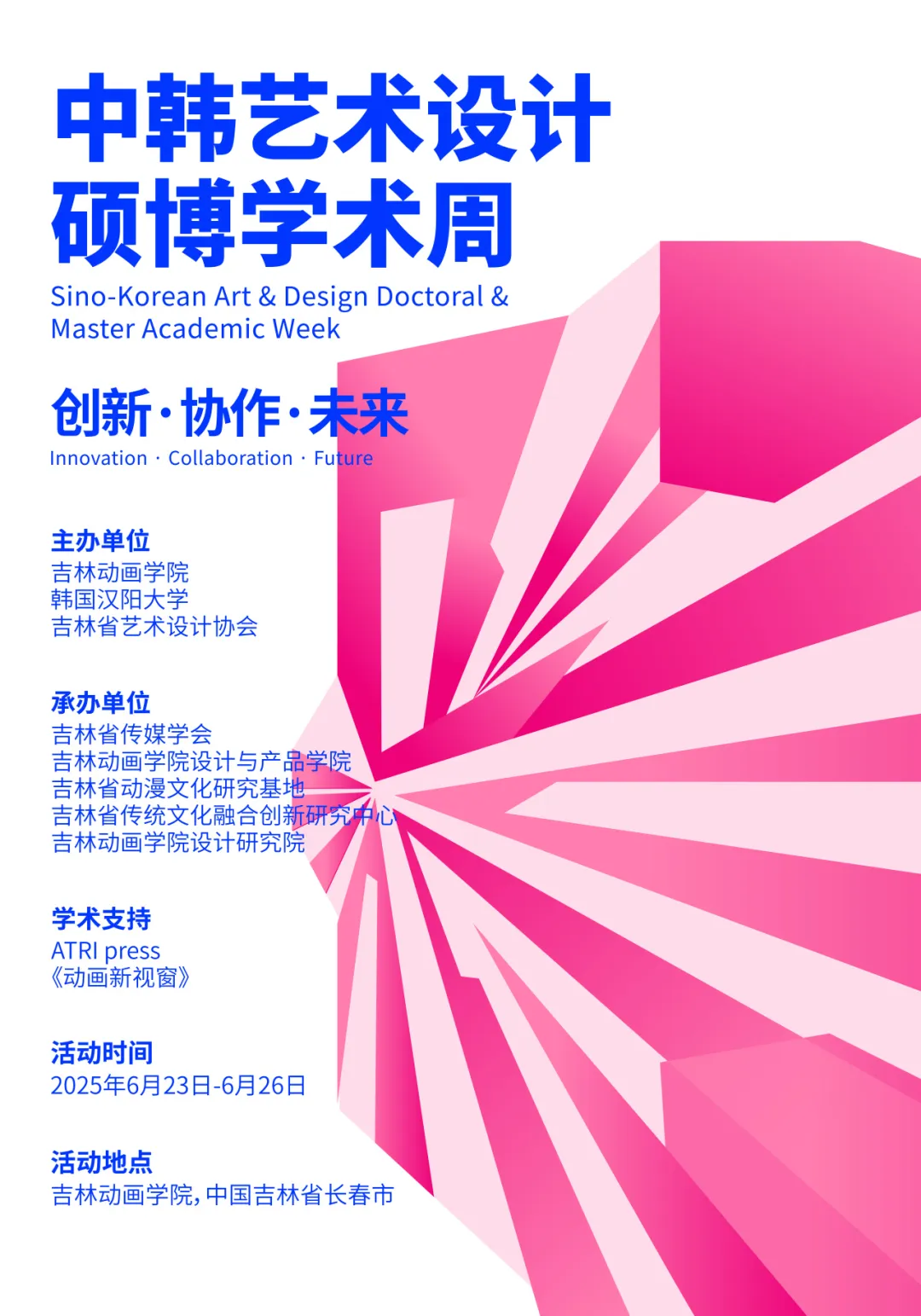
Recently, the "China-Korea Art and Design Postgraduate Academic Week" officially opened at Jilin Animation Institute. The event is jointly hosted by Jilin Animation Institute, Hanyang University of Korea, and the Jilin Province Art & Design Association, and co-organized by the Jilin Province Communication Society, the School of Design and Product at Jilin Animation Institute, the Jilin Province Animation Culture Research Base, the Jilin Province Traditional Culture Integration and Innovation Research Center, and the Design Research Institute of Jilin Animation Institute.As one of the key activities under the “Empowered & Boundless 2025 Summer International π” series, this academic week provides an international platform for in-depth exchange and intellectual collision between experts, scholars, and postgraduate elites in the field of art and design from China and South Korea. Together, they explore the infinite possibilities of a design-driven future. By bringing together master's and doctoral students from Hanyang University and top universities in Jilin Province, the academic week focuses on cutting-edge topics in art and design, emphasizing both breakthrough theoretical thinking and localized approaches to practical application.
The opening ceremony was attended by Professor Wang Wei from the Department of Digital Art at Peking University, Professor Jung Ui-tae, Head of the Department of Visual Communication Design at the School of Design, Hanyang University, Professor Maeng Ji Yun, Adjunct Professor at the Graduate School of Hanyang University, Liu Zhenhua, Executive President of Jilin Animation Institute, as well as representatives of master's and doctoral students from the School of Design at Hanyang University. Liu Zhenhua and Jung Ui-tae delivered speeches at the opening ceremony. During the academic week, Professor Wang Wei gave a lecture titled“Media Arts and China’s Unique Art Form of Lianhuanhua”, and Professor Moon Ji-yoon presented on“Diversity and Expansion in Environmental Design.”
China-Korea Cooperation Empowers the Northeast Asia Design Community
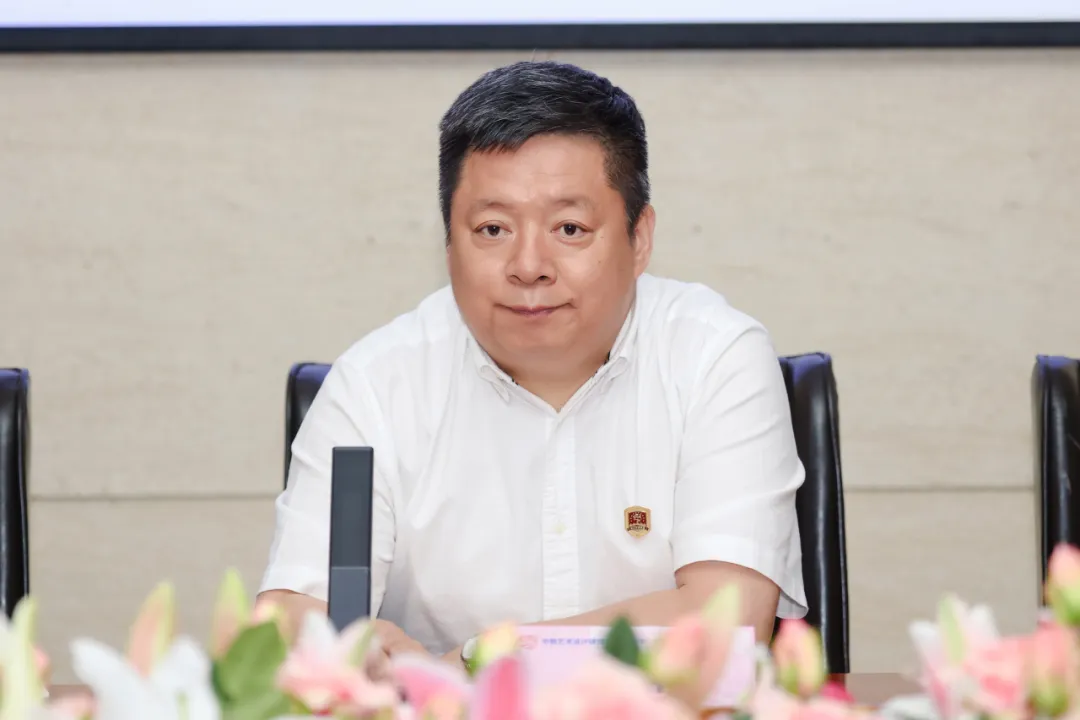
Speech by Liu Zhenhua
Liu Zhenhua stated that, as a university deeply rooted in the cultural and creative industries for 25 years, Jilin Animation Institute has always upheld its distinctive educational philosophy of "open internationalization, integration of education, research, and industry, and high-tech innovation in creative products." The university firmly believes that true design innovation must be grounded in rich cultural heritage and, more importantly, driven by borderless intellectual exchange. Hanyang University’s cutting-edge achievements in digital media, combined with our four-dimensional talent cultivation system—integrating education, culture, technology, and market—represent a vivid example of building a Northeast Asian cultural community. It is our hope that this academic week will become a new landmark of China-Korea collaboration in design education, igniting the blueprint for innovation across Northeast Asia.
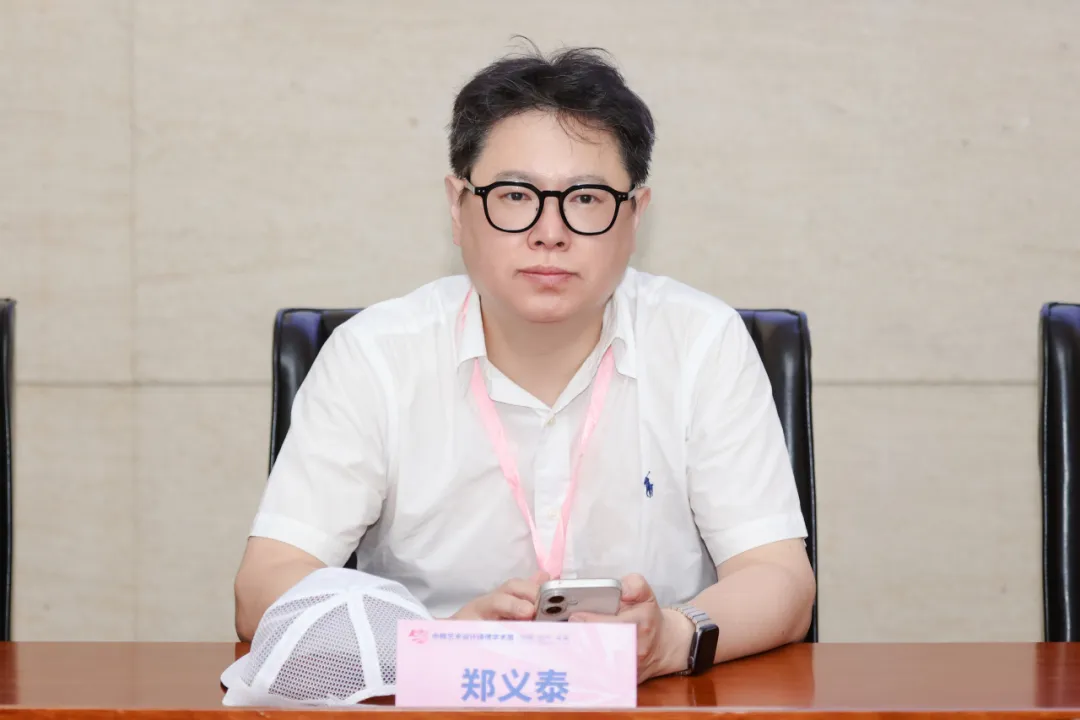
Speeched by Jung Ui-tae
Professor Jung Ui-tae shared that he visited Jilin Animation Institute in April this year to participate in the Cultural Design Innovation Symposium. After returning to Korea, he immediately engaged his students in discussions and formed a design research group. This time, he brought with him a group of students who are passionate about design and art to participate in the academic week.
Professor Jung specializes in data-related research, with a particular focus on future trends in design. He noted that the rise of AIGC (AI-Generated Content) has brought certain challenges to the academic world. He believes that we should approach this technological shift with respect and engage in thoughtful reflection on how to leverage these advancements to further research in our respective fields. He expressed his hope that the participating students would gain inspiration and achieve fruitful results through this event.
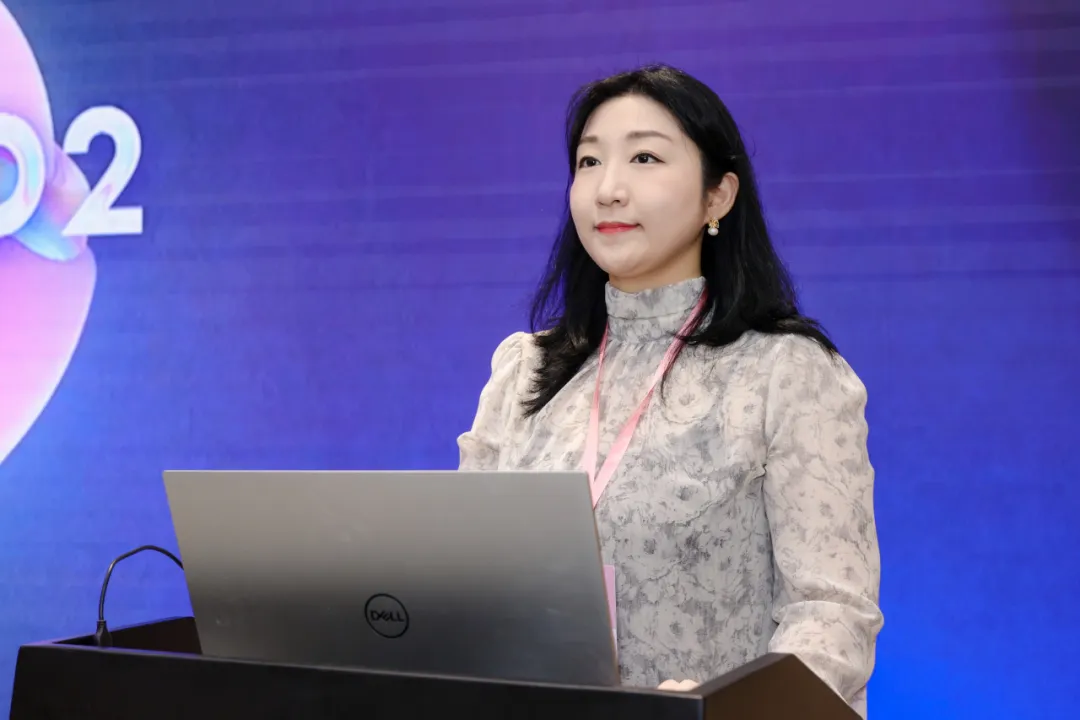
Lecture byMaeng Ji Yun
Chinese and Korean Scholars Discuss Pathways to Design Innovation
Maeng Ji Yundelivered a lecture titled “Diversity and Expansion in Environmental Design,” focusing on spatial design in performance shows. Using the Korean survival idol reality show *Island* as a case study, she explored the practice and innovation of spatial design across multiple fields. She noted that current space design education in China largely centers on physical interior spaces, whereas the field has actually expanded from ecological spaces to include cultural spaces such as broadcasting and exhibitions. The spatial design of *Island* revolves around awakening the hidden diversity within contestants, encompassing ultra-large, multifunctional spaces for performances, variety shows, rehearsals, and daily living.
Maeng Ji Yunprovided a detailed explanation of the spatial design process for *Island*. She emphasized that the key to program spatial design is translating the show’s concept into design language. The design team should be involved from the initial concept discussion stage to fully understand the program concept and the evolving needs of the content. Taking the first-floor lobby of *Island* as an example, the design team used imagery to convey the visual concept, reinforced super visual symbols, and ultimately presented a design effect that met the conceptual requirements of the show.
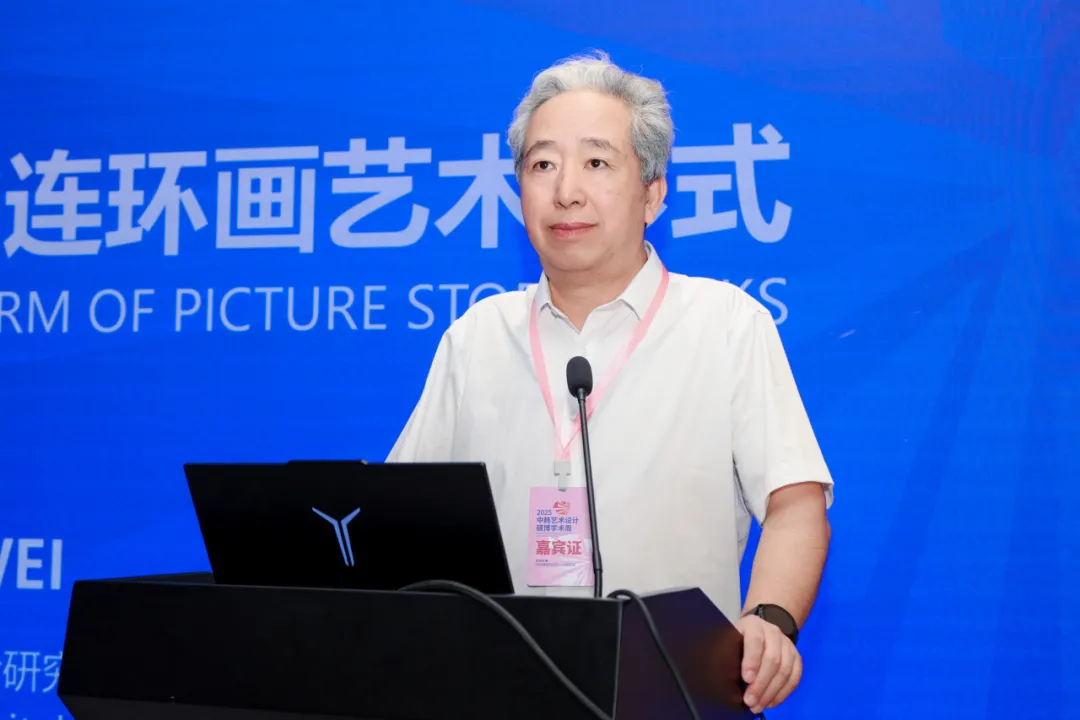
Lecture by Wang Wei
Professor Wang Wei delivered a lecture titled "Media Arts and China’s Unique Art Form of Lianhuanhua." He shared his interdisciplinary experience ranging from scene design for CCTV animations to concept creation for Hollywood films, emphasizing that lianhuanhua (Chinese picture-story books) is a unique art form where one individual completes the script, storyboarding, and character design. This stands in interesting contrast to the collective creation model typical in the animation industry.
Combining European painting techniques with traditional Chinese ink wash, Wang explored an artistic style that merges realism and expressionism. His works, such as the 50-meter-long scroll Red Mountain Cultural Site, integrate archaeological research with artistic imagination, showcasing the potential for visual storytelling in cultural heritage.
Wang noted that facing the impact of new media, lianhuanhua must innovate while preserving tradition—for example, by drawing on animation storyboarding language and integrating digital technologies. As an educator, he advocates maintaining a creative philosophy "rooted in life." He stressed that lianhuanhua continues to play a vital role in cultural transmission and historical documentation, urging young creators to draw nourishment from traditional culture and promote the living inheritance of this art form.
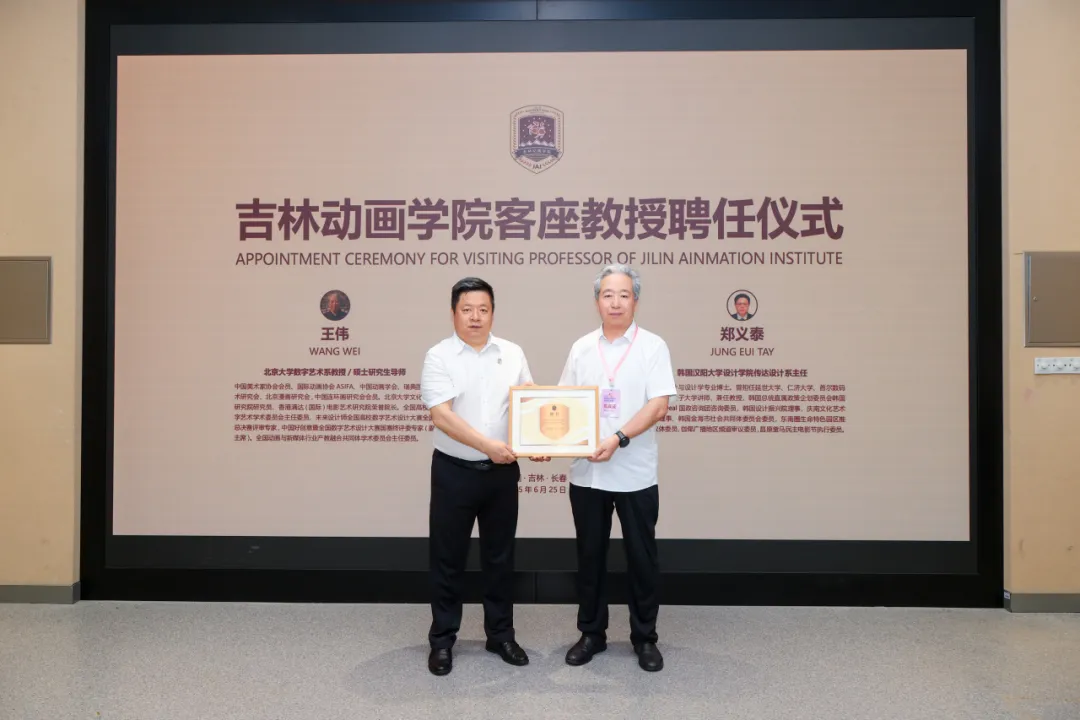
Liu Zhenhua Presented the Letter of Appointment for Visiting Professor to Wang Wei
During the academic week, Liu Zhenhua presented letters of appointment for Visiting Professorships to Wang Wei and Jung Ui-tae, expressing hope for future collaboration in areas such as academic development and talent cultivation. Professor Jung Ui-tae and other experts awarded certificates of completion to participants of the academic week.
Young faculty members from Jilin Animation Institute and master's and doctoral students from Hanyang University engaged in discussions on four major topics: “Contemporary Transformation and Digital Inheritance of Traditional Crafts,” “Artificial Intelligence, Human-Computer Interaction, and Future Design Trends,” “Urban Heritage, Spatial Reconstruction, and Regional Cultural Expression,” and “Design Thinking, Aesthetic Ethics, and Teaching Innovation.” A total of 21 scholars shared their insights, sparking interdisciplinary dialogue and intellectual exchange.
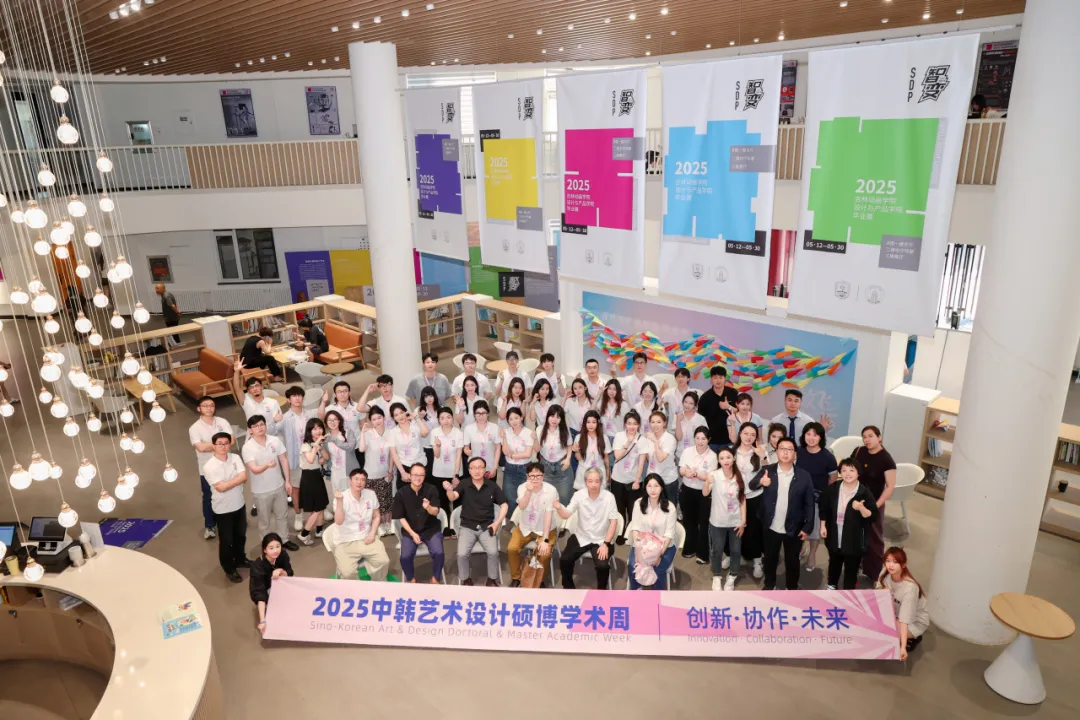
Group Photo for the Memory
The "China-Korea Art and Design Postgraduate Academic Week" is positioned as a platform for cross-border dialogue and symbiotic innovation in art and design between China and Korea. It aims to create an open and diverse academic exchange environment. Emphasizing the dual empowerment of academic sharing and cultural mutual learning, the event seeks to establish a collaborative innovation network for art and design research across the Northeast Asia region, while promoting the international dissemination and sustainable transformation of academic achievements.Looking ahead, the initiative will continue to expand its boundaries of cooperation, becoming a leading platform for frontier exchanges between Chinese and Korean academia in the intersecting fields of art, technology, and society.