Recently, the International Association of Film and Television Schools (CILECT) officially announced the results of the 2026 Vision & Innovation Grants (VIGs). The proposal submitted by the School of Animation Art at Jilin Animation Institute (JAI), titled “Empathy Sync: Bio-feedback Driven Interactive Audiovisual Narrative Laboratory”, was successfully selected and awarded special funding. This marks the second consecutive year that JAI has received support from the program since its first successful application in 2025. Only five projects worldwide were approved this year, and JAI was the only institution from China selected for funding.
The International Association of Film and Television Schools (CILECT) is one of the world’s most influential organizations in film and television higher education, bringing together more than 190 member institutions from 65 countries and regions. The Vision & Innovation Grants (VIGs) serve as a seed funding initiative established by CILECT to support curriculum innovation and research exploration in film, television, and media education.
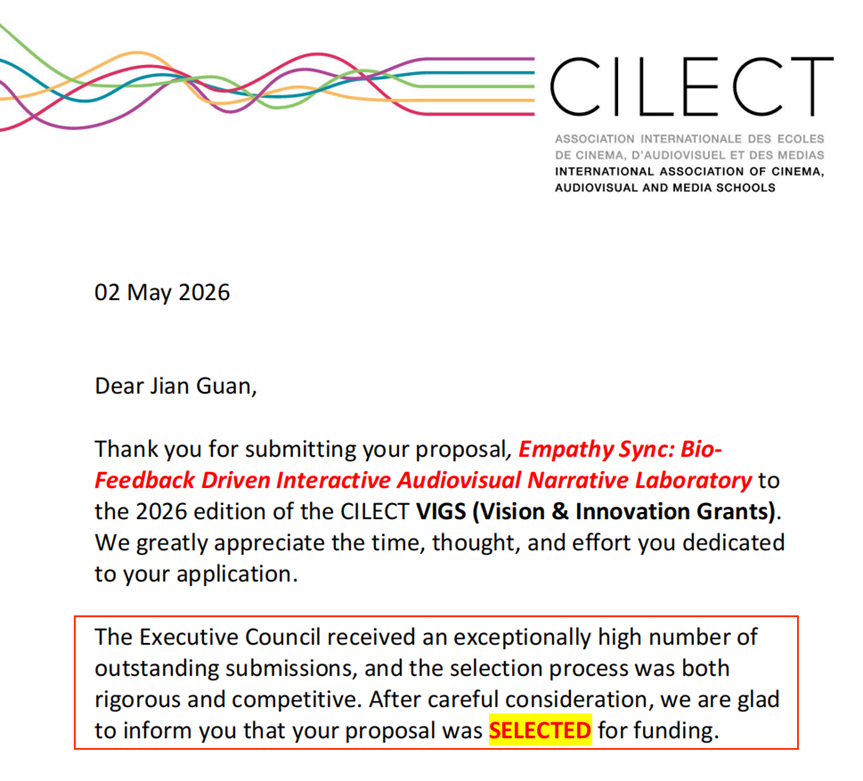
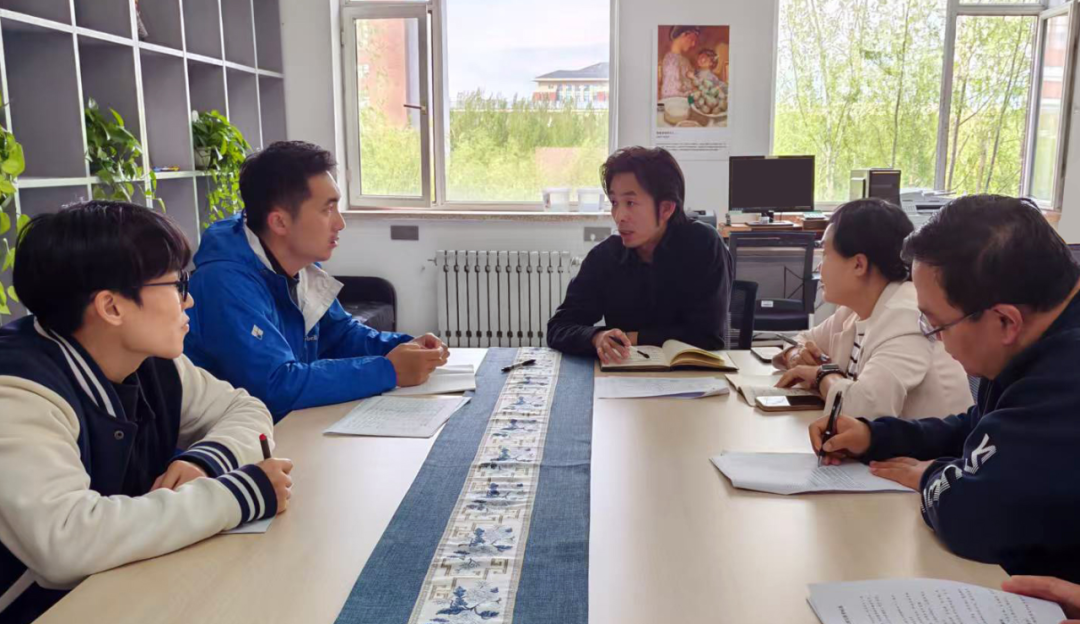
The “Empathy Sync: Bio-feedback Driven Interactive Audiovisual Narrative Laboratory” course team is composed of a group of outstanding young and mid-career faculty members from the School of Animation Art. With a well-balanced disciplinary structure and broad academic perspectives, the team has long focused on cutting-edge research in animation narrative, interaction design, and digital media. Team members also possess extensive experience in curriculum development, project research and development, and interdisciplinary industry-academia collaboration.
Built upon JAI’s distinctive educational philosophy integrating education, research, and industry, the course addresses current industry challenges such as narrative homogenization and limited interactivity in film and animation storytelling. Closely aligned with the ongoing convergence of technology and art, the project centers on the integration of bio-feedback technology with audiovisual narrative systems. The course innovatively establishes a three-dimensional framework of “physiological feedback – intelligent analysis – narrative adaptation,” integrating biosensors and AI-based emotional modeling technologies to create a real-time responsive interactive storytelling paradigm.
By transforming audiences’ physiological responses into dynamic narrative-driving elements, the project guides students to explore new models of technological and artistic integration in VR immersive film and animation production, breaking through the limitations of traditional linear storytelling. Supported by a self-developed experimental teaching platform, the methodologies, interactive imaging frameworks, and content libraries generated through the course are expected to contribute to teaching reform and industry innovation in the field of responsive media studies.
Receiving the grant for two consecutive years fully demonstrates Jilin Animation Institute’s distinctive educational strengths and strong academic foundation. It also reflects the university’s steadily growing academic influence and global competitiveness in cutting-edge film and television arts education, as well as intelligent animation innovation research. This achievement represents an important milestone in JAI’s sustained engagement in international academic exchange and its commitment to aligning with the forefront of global film and media education. It also lays a solid foundation for the university’s continued participation in international film education initiatives and the enhancement of its global academic reputation.
Looking ahead, Jilin Animation Institute will remain committed to its distinctive educational philosophy, continue advancing interdisciplinary frontier studies, and further strengthen innovation in teaching and academic research. Through high-quality educational achievements, the university aims to contribute to the continued global development and recognition of Chinese film and television arts education.