As the digital intelligence wave rises, the pursuit of collaborative innovation paves the way for the future. To seize development opportunities in the digital intelligence era and promote cross-disciplinary integration in animation education alongside deep industry-education-research collaboration, the "Limitless Intelligence, Innovation with Purpose" Animation Education Academic Seminar was held at Jilin Animation Institute on May 20.
Focusing on the theme of "Collaborative Innovation in Animation Industry-Education-Research and the Transformation of Educational Achievements from an International Perspective," experts and scholars from the domestic and international animation fields gathered to share keynote insights. Their discussions covered frontier topics such as AI technology application, international educational cooperation, and the construction of scenario-based teaching systems, delivering an academic feast that balanced theoretical depth with practical insight.
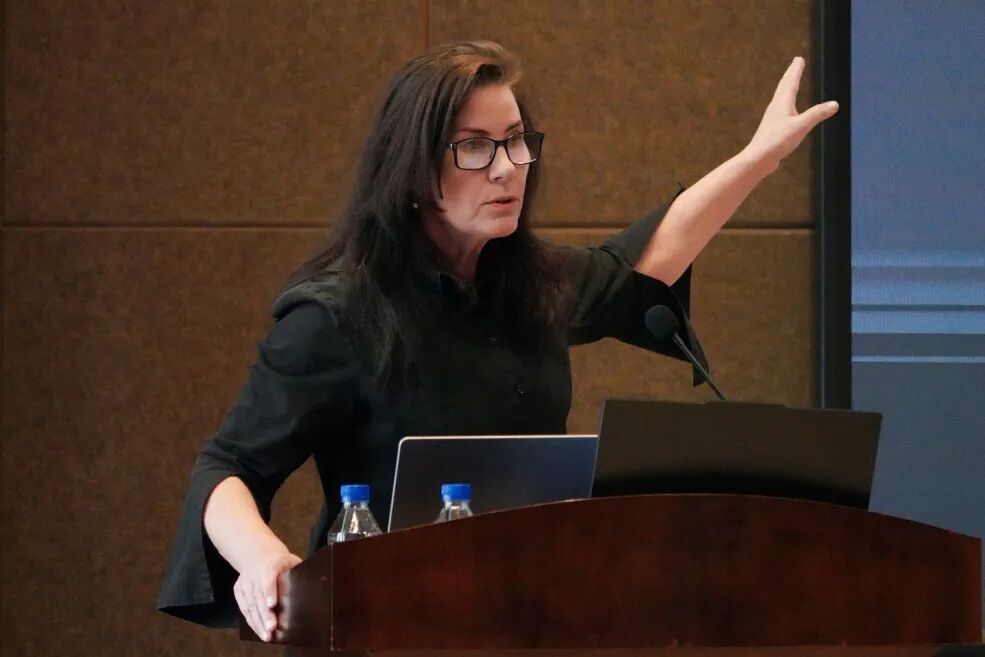
Rachel Landers delivered a keynote speech titled "The 'Miracle Project': Creating Transformative Science Stories for Children—Human-Centered Design and AI Production Workflows." In her speech, she discussed an animated hybrid science documentary project aimed at children, exploring the interdisciplinary integration of the humanities, arts, and STEM. She highlighted how art can empower science communication, providing innovative ideas for animation education and original content creation.
She stated that the team innovatively adopted a collaborative creation model of "human-centered design + AI production." Core tasks such as creative conceptualization, interviews, scientific research translation, character design, and scriptwriting were fully managed by a professional team of animators, scientists, and documentary filmmakers, while partnering with the industry producer VANDAL to efficiently generate animation using AI technology. This model not only fundamentally solves the challenges of high costs and long production cycles associated with traditional science education animation but also allows AI to serve as a powerful assistant in enhancing creative efficiency.
Currently, the project's pilot episode has been successfully launched. Landers believes that an animated hybrid science documentary for children holds significant social influence and scientific communication value. This innovative practice fully validates the immense potential of AI in the field of science communication and provides a new paradigm of great reference value for the development and promotion of science education curricula in primary and secondary schools globally.
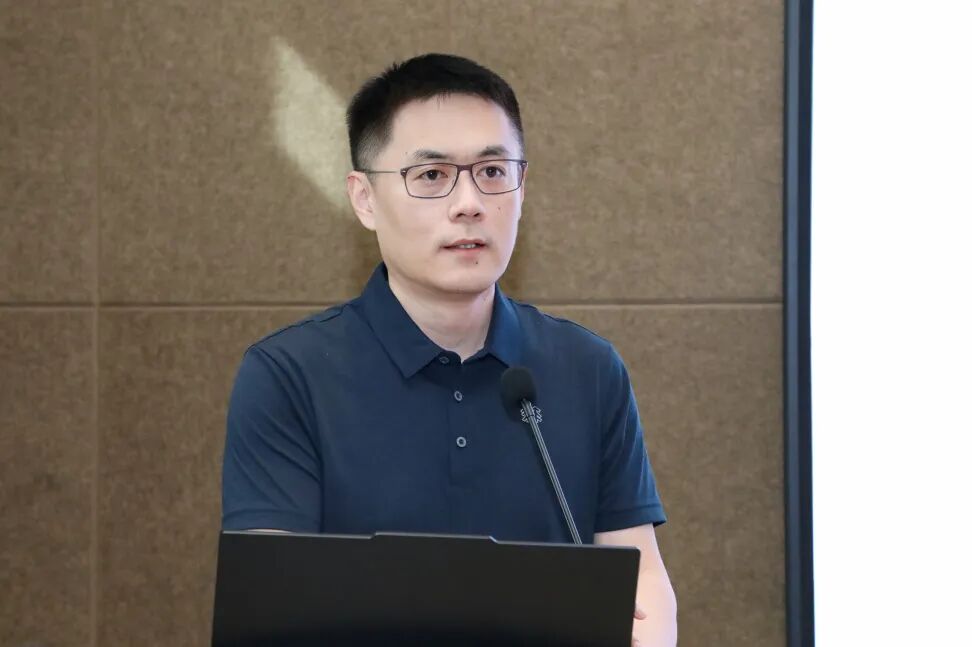
Ai Shengying delivered a keynote speech titled "Opportunities and Challenges Brought by AI to Film and Animation Education." Grounded in the reality of domestic animation education and focusing on the core of industry-education-research collaboration, he systematically elucidated practical pathways for talent cultivation, the integration of school-enterprise resources, and the transformation of educational achievements, providing valuable experience for the reform of local animation education. He deeply analyzed the disruptive changes that AI technology has brought to the film and animation industry model, interpreted in detail the astonishing efficiency AI demonstrates in production processes, and objectively pointed out the current bottlenecks and limitations of the technology. He noted that as the technical threshold gradually lowers, storytelling ability and the capacity for life perception have become the irreplaceable core competitiveness of creators. Art education must accelerate its transition toward being "idea-driven," focusing on the deep cultivation of core skills, professional awareness, and comprehensive literacy to deliver talents with genuine critical thinking abilities to the industry.
He expressed his wish for animation colleagues to take technology as their wings to embrace the wave of change, keep humanities as their roots to hold fast to their artistic aspirations, and treat craftsmanship as their soul to deeply cultivate their professional fields. He called for collective efforts to promote high-quality development in the film and animation industry, to cultivate new-era film and animation talents, to empower creativity with technology, to warm hearts with art, and to write a brand new chapter for the film and animation cause in the AI era.
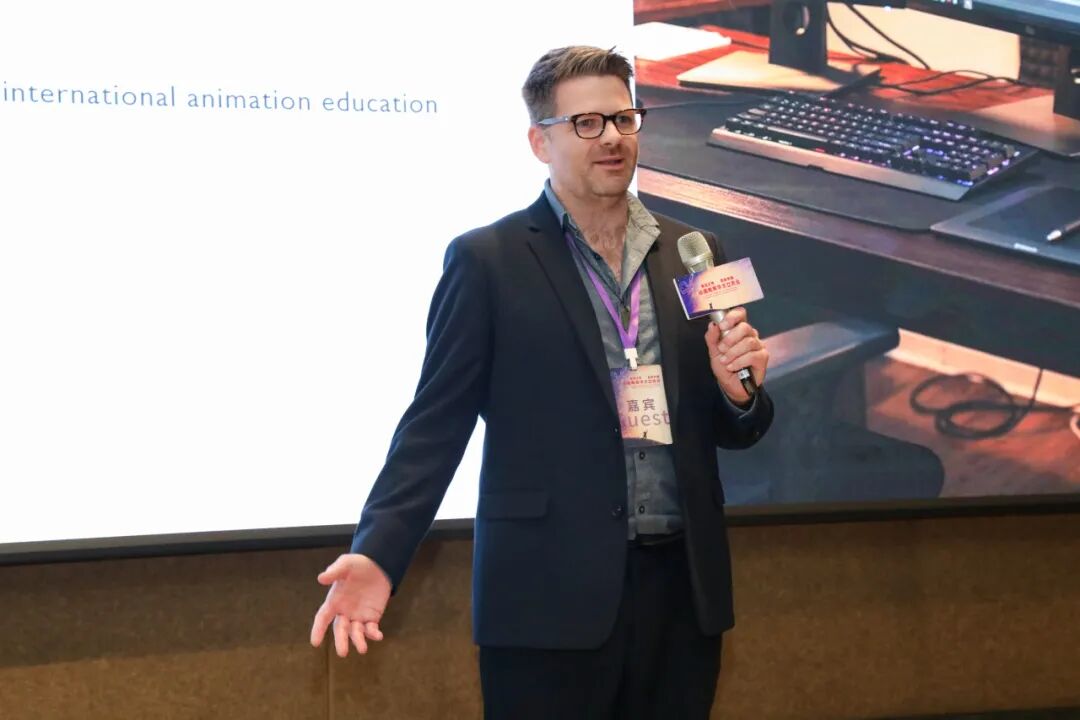
Arien Hielkema delivered a keynote speech titled "From Barriers to Bridges: Artificial Intelligence, Digital Technology, Animation Innovation, and International Education." Offering an international perspective, he interpreted cross-cultural animation industry-education-research collaborative models and provided important references for building international cooperation platforms and broadening educational horizons. He noted that international students often fall into "silence" during critique sessions due to language barriers, cultural differences, and a lack of confidence; this silence is frequently misinterpreted as a lack of ability, but in reality, it is a rupture in the support mechanisms of the educational system. He further argued that artificial intelligence should neither be viewed as a tool to replace teachers or students, nor as a shortcut to bypass technical craftsmanship.
He proposed the construction of "customized course AI assistants," which utilize exclusive data such as class recordings, assignment briefs, and grading rubrics to train AI. This tool is designed to fill the gap in after-class support, helping students decode implicit assumptions in assignments, understand professional terminology, rehearse critique dialogues, and translate abstract feedback into concrete operational steps. In this way, AI becomes a bridge connecting student creativity with teacher guidance, reducing communication friction, enriching participation, and ensuring that the voices of students from diverse cultural backgrounds can be clearly heard.
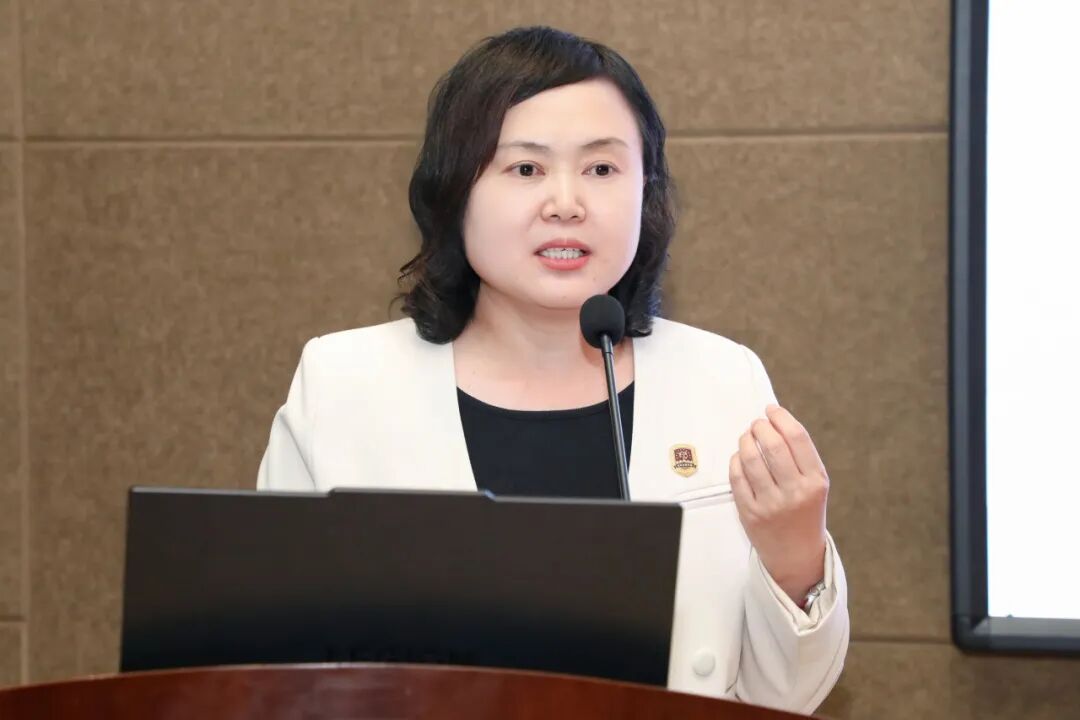
Zhao Guijing delivered a keynote speech titled "From the Studio to the Main Battlefield: Constructing a Distinctive Scenario-Based Teaching System through Industry-Academic-Research Collaboration." Based on Jilin Animation Institute's unique educational characteristics and its practices in integrating industry with education, she showcased explorations in the innovation of animation talent cultivation models and the precise alignment of teaching resources with industry demands, offering a practical and replicable model for implementation.
She stated that in today's era, where artificial intelligence is profoundly transforming animation education, traditional classrooms can no longer meet the diverse learning needs of students. Jilin Animation Institute has constructed an immersive, scenario-based practical teaching system. Relying on characteristic spaces such as the Immersive Teaching Exhibition of 100 Years of Chinese Animation and the Exhibition of Fine Comic Manuscript Drafts, the institute conducts "immersive" teaching—including coursework, lecture exchanges, and appreciation of classic works—to build a new ecology for general education. Guided by industry talent demands, the school and enterprises collaborate to establish a practical teaching platform for industry-education integration. This achieves a full-chain connection from classroom to industry and from creation to product, ensuring that students "enter the profession upon enrollment and achieve employment upon graduation." Adhering strictly to a student-centered approach, the institute implements a precise talent cultivation model driven by real-world projects. She noted that in the face of accelerating AI technological changes, the school has created an "Animation Universe" platform, encouraging students to build personal large language models to assist in their creative work. She believes that education must recognize and adapt to changes, proactively engaging in dialogue with the market and practice. By using real scenarios, real problems, and real practice to produce real results, the institute aims to culThis seminar further established an international platform for animation education exchange and consolidated a consensus on industry-education-research collaborative innovation. From the four dimensions of international experience, local practice, institutional exploration, and technological empowerment, the four experts responded deeply to the seminar's theme of "Limitless Intelligence, Innovation with Purpose". Their contributions indicated the direction for consolidating and renewing animation education while fostering cross-disciplinary symbiosis. Furthermore, they injected strong momentum into promoting the digital transformation of animation education and empowering industry upgrades, thereby assisting Chinese animation in demonstrating new vitality and achieving new leaps on the global stage.
Looking to the future, Jilin Animation Institute will continue to uphold the concepts of collaborative symbiosis, openness, and sharing. The institute aims to deepen industry-education-research collaborative innovation, break down barriers between disciplines and industries, and focus on cultivating composite animation talents who possess profound cultural foundations, strong innovation capabilities, and high artistic accomplishments, all while supporting the high-quality development of China's animation education and industry.tivate high-quality, application-oriented talents.