To deepen innovation and practice in animation education in the digital intelligence era, explore new pathways for the integrated development of the animation industry and higher education, and reconstruct the standards for talent cultivation in the new era, the “Boundless Intelligence, Principled Innovation: Academic Symposium on Animation Education” commenced its main seminar session on May 20.
The symposium featured a distinguished panel of experts, including Li Jianping, former Dean of the School of Animation at Beijing Film Academy, Ph.D. supervisor, and Director of the Animation Art Committee of the China Artists Association; Max Hattler, Associate Professor and Programme Leader of the BA Creative Media at the School of Creative Media, City University of Hong Kong; Xiao Zhidong, Chief Academic Expert and Ph.D. supervisor at the National Centre for Computer Animation (NCCA), Bournemouth University, UK; and Ryu Yoo-seok, Dean and Associate Professor of the School of Animation at Chungkang College of Cultural Industries, South Korea.
Focusing on the global transformation and collaborative development of animation education, the participants anchored their discussion in emerging industry trends and the rapid advancement of digital intelligence. The sessions delved into core themes such as maintaining educational integrity while fostering innovation, cross-disciplinary integration, and talent development. By integrating diverse perspectives, cutting-edge concepts, and practical insights, the symposium provided a powerful impetus for the high-quality evolution of animation education in the new era.
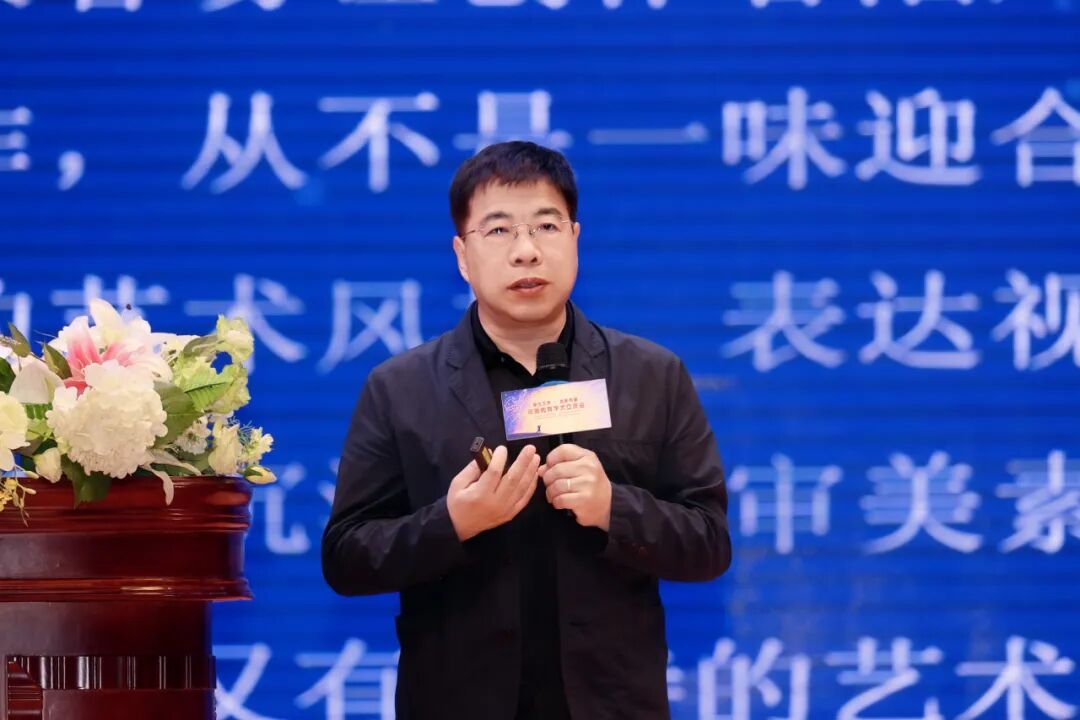
Li Jianping delivered a presentation titled "Reflections on Innovation in Animation Pedagogy and Creative Practice in the Age of Digital Intelligence." He pointed out that as the digital wave sweeps across the globe, digital technologies—represented by AI—are reshaping the creative industry landscape at an unprecedented pace. Technological innovation has significantly lowered the barriers to content production, allowing projects that once required massive teams and substantial capital to be completed efficiently by individual creators or small teams in a short timeframe. This not only provides creators with unprecedented tools and opportunities but also necessitates that educational systems and students continuously update their knowledge base to remain agile and adapt to the new industry production environment.
Drawing on case studies, he affirmed the immense potential of AI technology in compensating for the limitations of individual experience. However, he also emphasized that AI-generated styles remain confined by existing training data and cannot fully replace human subjective consciousness and artistic creativity. In complex animation projects, the human ability to maintain comprehensive control and make artistic judgments—specifically in formative arts, performance, and storytelling—remains the soul of a work. Technology, he noted, is a powerful engine, but humanistic values and creativity are the helmsmen that steer the direction.
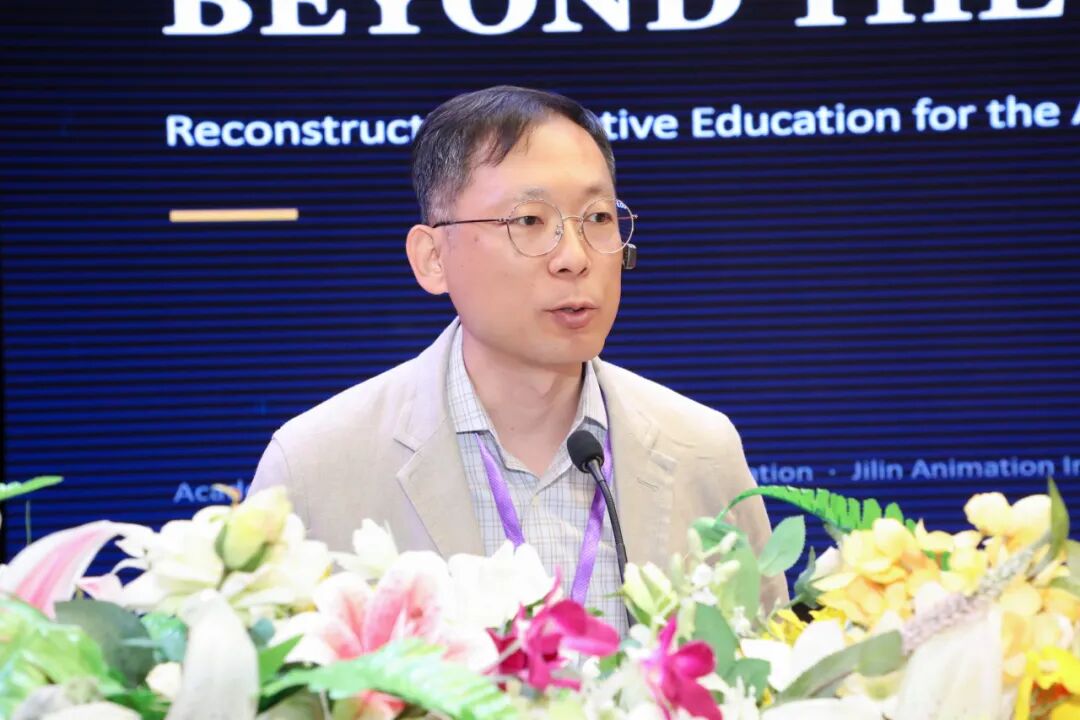
Ryu Yoo-seok presented a keynote report titled "Beyond the Pipeline: Reconstructing Creative Education Systems in the AI Era," drawing on his practical experience in the Korean animation industry and achievements in educational reform to provide an in-depth interpretation of the transformation paths for animation education through the lens of industry-academia integration. He pointed out that AI technology has fundamentally shattered the assembly-line, highly specialized division of labor in the animation industry. The traditional "isolated specialist" in a single role is no longer suited to industry development; the market now urgently needs "all-rounder" creators who possess end-to-end production control, humanistic artistic literacy, and a director’s holistic mindset.
He noted that AI technology has significantly compressed the professional development cycle for industry newcomers. Consequently, the demands companies place on graduates have leaped from basic executors to core creators at a director level, making the reconstruction of the animation education system an urgent priority. He proposed several key strategies: transforming campus teaching environments into industry-standard practice centers to replicate the professional growth ecosystem; deepening foundational professional education while optimizing talent development hierarchies; shifting talent evaluation criteria from final output to the creative process; and pivoting the focus of instruction from mechanical technical training to creative iteration and critical optimization. Furthermore, he advocated for flexible academic systems that respect the developmental patterns of artistic talent. He concluded that the transformation of animation education is not a battle for individual institutions to fight alone, but rather a collective endeavor requiring global collaboration among universities to build new standards and systems for creative education in the digital intelligence era, and to jointly redraw the blueprint for the future of creative pedagogy.
This symposium will provide a vital reference for the construction of animation disciplines, curriculum reform, talent cultivation, and industry-academia integration in higher education institutions, while injecting new intellectual momentum into technological innovation, content creation, and industrial upgrading within the animation sector. Moving forward, Jilin Animation Institute will continue to cultivate the field of animation education. By anchoring itself in the digital intelligence wave while remaining steadfast in its artistic core, the institute will deepen cross-disciplinary and industry-academia integration, continue to foster high-quality, interdisciplinary animation creative talent, contribute to the high-quality development of China's animation industry, and promote the collaborative advancement and innovative future of global animation education.