
On June 21, the seminar “High-Quality Development of Future Chinese Animation Education under the AI Context,” an important branch event of the 2024 National Art Fund–supported project “Research Exhibition on the Academic Lineage and Spirit of Chinese Animation,” was held at the Cultural and Arts Center of our university. Guided by the Animation and Digital Media Teaching Steering Committee of the Ministry of Education, the seminar was jointly organized by China Academy of Art and Jilin Animation Institute. It aims to use AI technological innovation as an entry point to offer new ideas and directions for the development of Chinese animation education from multiple perspectives.
Attending the seminar were Professor Huang Xinyuan, Secretary-General of the Animation and Digital Media Teaching Steering Committee of the Ministry of Education and Party Secretary of the School of Animation and Digital Arts at Communication University of China; Professor Li Jianping, Deputy Director of the Steering Committee, Director of the Animation Committee of the China Artists Association, Dean of the School of Animation at Beijing Film Academy, and doctoral supervisor; Professor Wu Xiaohua, Committee Member of the Steering Committee, Deputy Director of the Supervisory Committee and Academic Committee Member of China Academy of Art; Professor Cai Xinyuan, Committee Member and Dean of the School of Design at Huazhong University of Science and Technology; Professor Zhou Zongkai, Committee Member and Professor at the School of Film and Animation at Sichuan Fine Arts Institute; Professor Xuan Xuejun, Vice Director of the Animation and Game School at China Academy of Art and Deputy Director of the Animation Art Committee of the China Artists Association; Associate Professor Yang Chenxi from the Film School at China Academy of Art; Researcher Zheng Liguo, Chairman and President of Jilin Animation Institute; along with related leaders, faculty, and student representatives from our university. The seminar was chaired by Liu Zhenhua, Executive President of our university.
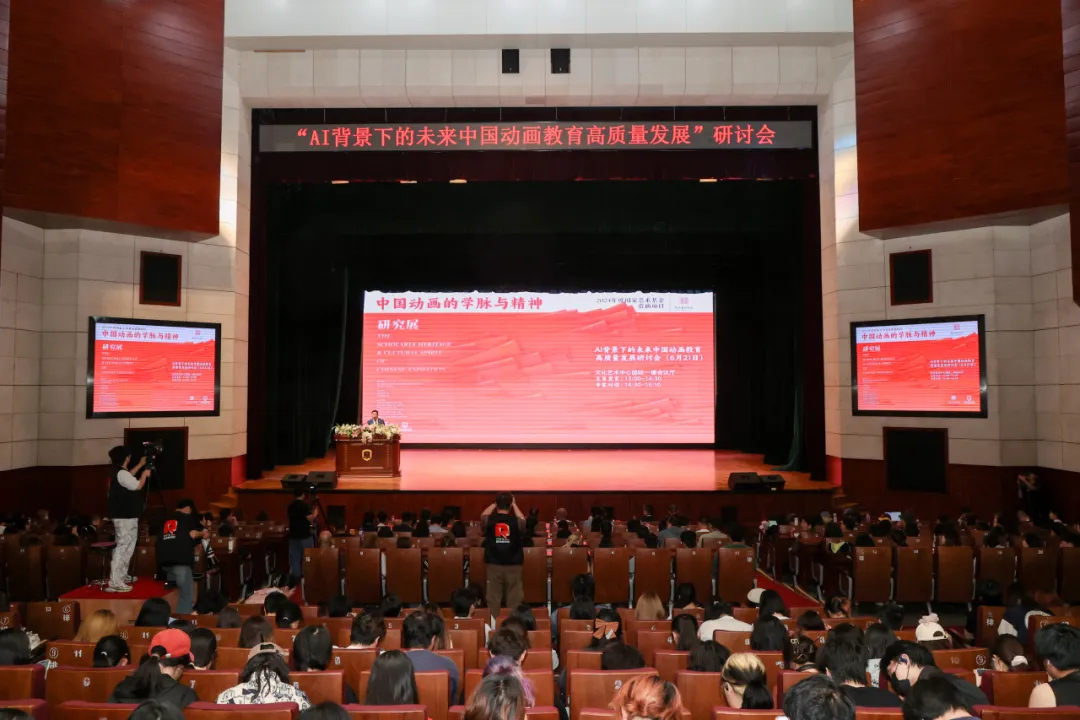
At the seminar
The seminar consisted of two sessions: keynote speeches and a roundtable discussion. Cai Xinyuan and Xuan Xuejun delivered keynote speeches on the theme “High-Quality Development of Future Chinese Animation Education under the AI Context,” titled “After the Dawn: Concepts and Progress of AI Animation” and “Cultural Innovation in the Digital Intelligence Era,” respectively. The roundtable discussion featured Huang Xinyuan, Li Jianping, Wu Xiaohua, Cai Xinyuan, Zhou Zongkai, and our university’s Associate Dean and Professor of the Animation Arts School, Zhao Guijing, engaging in multidimensional reflections on the core topics. The roundtable was chaired by Yang Chenxi.
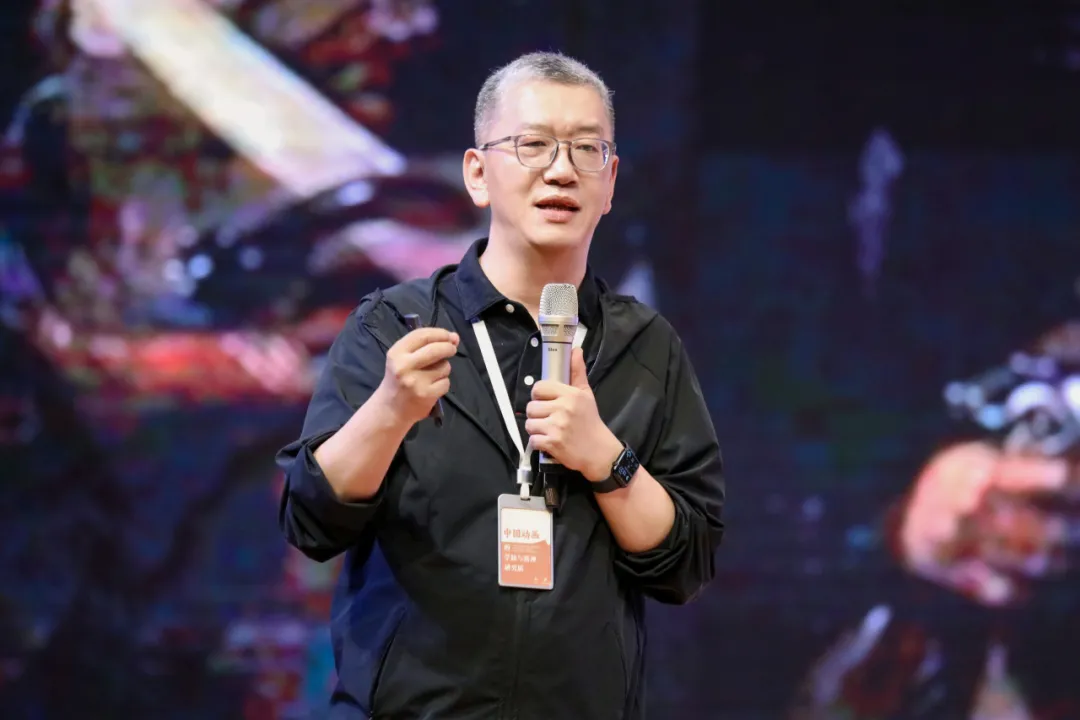
Keynote Speech by Cai Xinyuan
Cai Xinyuan began with the example of Kodak’s decline due to its refusal to embrace technological change, highlighting the disruptive impact of AI on the animation industry. He emphasized that animation education must break down traditional disciplinary barriers and deeply integrate AI technology with artistic creation. Generative AI has fundamentally changed the logic of animation production, as AI now possesses creative capabilities. AI technology is profoundly transforming traditional animation workflows, driving a shift from manual drawing and segmented collaboration to intelligent, integrated processes. Previously, animation relied heavily on multiple manual stages such as scriptwriting, storyboard design, modeling, animation production, and post-production compositing. Today, scripts can be generated from text, characters and scenes created via image synthesis, AI-driven motion and expression applied, and voice synthesized to synchronize audio and visuals—significantly improving efficiency and creative freedom. Animators are evolving from executors to guides and style controllers of AI, forming a new production paradigm of “creative—AI collaboration—rapid completion.” He proposed a three-stage theory of AI animation development: currently in the “tool stage,” where AI acts as an efficiency tool; progressing to the “methodology stage,” relying on AI logic to generate animation; and ultimately reaching the “ontology stage,” where AI creates new technological aesthetics.
Regarding industry transformation, Cai called for animation education to focus on cultivating four core abilities: imagination, creativity, aesthetic sense, and expressive power. He noted, “As AI lowers technical barriers, model training and the application of large language models will become the core competitive advantage.”
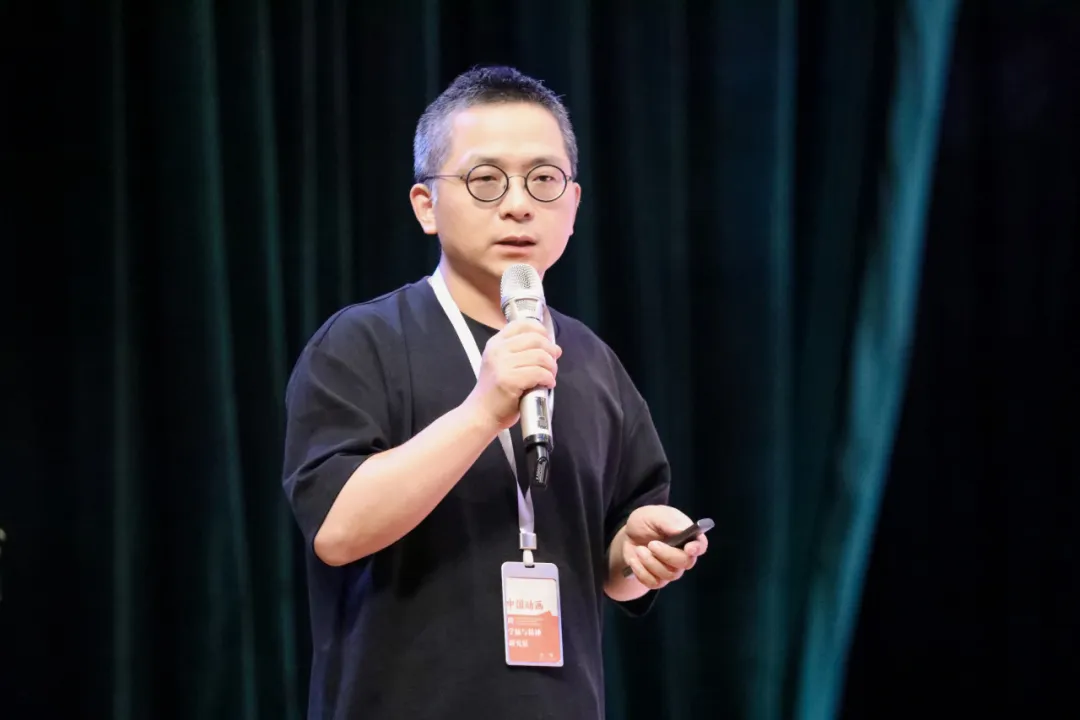
Keynote Speech by Xuan Xuejun
Xuan Xuejun pointed out that in the era of digital intelligence, AI has brought about transformative changes to the cultural ecosystem. In the fields of film, animation, and game content creation, numerous works have demonstrated forward-looking characteristics of the times. At the same time, cutting-edge technologies of this era have been deeply integrated into the content creation process.
He stated that the AI era is undoubtedly one filled with both challenges and opportunities. From five key dimensions—platform, content, experience, technology, and focus—he systematically elaborated on the pathways of cultural innovation in the age of digital intelligence. In terms of talent cultivation and industry integration, student project outcomes achieved high readership and download volumes through university-enterprise collaboration platforms. This not only provided students with valuable hands-on experience but also significantly boosted their future employability. In the realm of cultural dissemination, he emphasized that the core value delivered by the internet lies in content rather than pure technology. AI has injected new vitality into the inheritance and development of traditional culture. In today’s digital era, interactive experiences are constantly emerging, driven by new media, new devices, and new application scenarios. These bring numerous technical challenges while also creating entirely new experiences for users. New-age technological tools also bring great convenience to cultural creation. For example, by utilizing game engines and depth camera tracking technologies, the dynamic pictograms for the Asian Games were impressively realized. Lastly, he stressed the importance of focus in cultural innovation. Teams like Game Science dedicate their full energy to the creation of their works. This kind of dedicated spirit is especially valuable in today’s fast-paced world.
Roundtable Discussion: Exploring AI-Driven Animation from a Multidimensional Perspective
The successful convening of this seminar has brought greater clarity to how AI technology can be leveraged to advance high-quality development in animation education in the new era. It also helped define talent cultivation pathways that align with the demands of our time. The in-depth academic discussions and exchange of ideas have contributed to a clearer vision for the future direction of Chinese animation education, while also strengthening our collective confidence in moving forward. Looking ahead, our university will integrate the insights gained from this seminar into teaching practice, turning reflection into action, and dedicating continued efforts to the flourishing development of animation education in China.