The seminar on "Ecological Transformation of the Animation Industry Driven by AI" was held at Jilin Animation College
JiOn the morning of November 21, the main activity of the animation creation exchange week of "Animation Boundless · Intelligent Painting Future" - the seminar on "Ecological Transformation of the Animation Industry Driven by AI" was held in lin Animation College. Li Zhongqiu, member of the Council and Vice Chairman of the International Animation Association, Rawanbakhsh Sadji, Chairman of the Iranian Branch and Member of the Council, Elian Godif, a researcher of the Laboratory of Analogic and Digital Animation at the School of Fine Arts of the Portuguese Arts Research and Research Center of the Federal University of Rio de Janeiro, Brazil, National Education in Krakow, Poland Olga Bobrovska, assistant professor of the Institute of Art and Design of the Commission University, co-founder and director of the StopTrik International Film Festival, Italian director, screenwriter, stage designer, visual artist Monica Manganelli, Hungarian animated film producer Naja Andrasev , Wang Anyi, a producer of Shanghai Fine Arts Film Studio, Weng Ming, a famous Chinese animation director; Zheng Liguo, chairman and president of Jilin Animation College, Liu Xin, vice chairman, executive president Liu Zhenhua and other school leaders, as well as representatives of teachers and students of our school attended the seminar. This seminar is hosted by Li Zhongqiu, and there are two links: the keynote report and the roundtable dialogue.
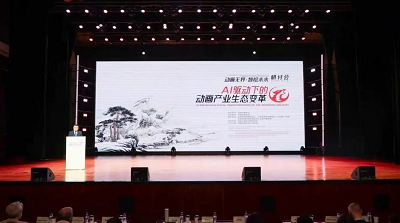
Seminar site
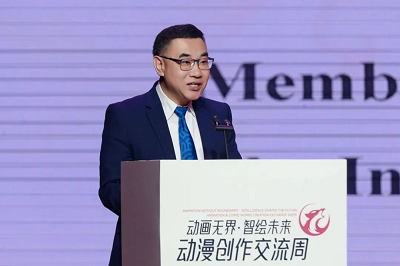
Li Zhongqiu made a keynote report
The keynote report revolves around the theme of "Ecological Transformation of the Animation Industry Driven by AI". Three authoritative experts and senior practitioners in the field of animation from different countries analyze the all-round impact of AI technology on the ecology of the animation industry from different dimensions and jointly make suggestions for the development of the animation industry in the AI era.
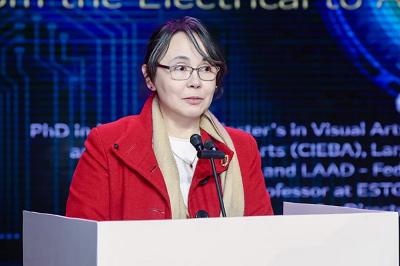
Elianne Godiff made a keynote report
pay attention to the value of manual skills and professional inheritance. She concluded that AI is not to replace human beings, but to build a dynamic, diverse and time-time animation new ecology with creators as a collaborative participant.Elian Godiff deeply explored how artificial intelligence can reshape the ecological structure of the animation industry with the title of "Ecological Transformation of the Animation Industry Driven by Artificial Intelligence - From Postmodern Electronic Ecology to Algorithm Ecology". She pointed out that since entering the 21st century, the logic, workflow and even cultural cognition of animation production have undergone fundamental changes. AI not only simplifies the creative process, but also reconstructs the relationship between creators and tools, promoting the whole industry from electronic ecology to algorithmic ecology. She believes that this technological change is not only a technological innovation, but also involves the profound transformation of cultural symbols and perceptions. She cited theories such as "liquid modernity" and "reflective cultural logic" to explain how AI can generate new works with both market adaptability and cultural connotation through data reorganization and style collage. At the same time, the role of the creator is changing from a single picture producer to a process coordinator, and its identity and authority have also been redefined. However, this transformation has also brought new challenges such as copyright ownership, weakening of creative spirituality and moral responsibility. Eliane Godiff reminded that while embracing technology, we should be alert to the risk of marginalization of human creativity, and
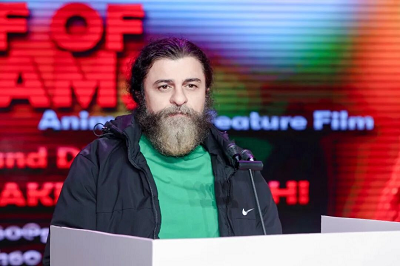
Rawanbachsh Sadji made a keynote report
Rawanbahsh Sadji gave a speech entitled "The Transformation of AI and Art Creation: Focus on the Field of Animation Production". At a time when digital technology is changing rapidly, AI is redefining the development route of the animation industry with its revolutionary power. The role of AI has changed from the original process optimization assistant to today's creative driving force, bringing new development opportunities and challenges to the animation field. Previously, AI mainly played a supporting role in automating repetitive tasks and simplifying workflows. Now, it has been able to create original content independently. The creative mode of human-computer collaboration has gradually blurred the creative boundaries between people and machines. The application of AI technology runs through all aspects of animation production. From the early conception, the mid-term production to the later improvement, it has significantly improved the production efficiency and creative rhythm of the industry. The impact of artificial intelligence on the field of art has two aspects: on the one hand, it has raised people's worries about the replacement of positions; on the other hand, it has also created new career opportunities. At the design level, the emergence of artificial intelligence makes automated tasks possible, but it may also lead to an increase in the unemployment rate in this field. The birth of new jobs is accompanied by new rules and innovative opportunities. In addition, the in-depth involvement of AI in the field of artistic creation has also caused a series of complex issues such as copyright confirmation and ethical boundaries. How to find a balance between technological innovation and industry norms to ensure the sustainable development of the industry has become an important topic to be discussed urgently.
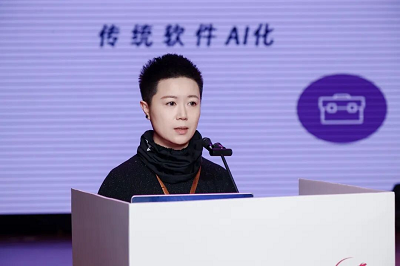
Wang Anyi made a keynote report
Wang Anyi deeply explored the profound changes brought by artificial intelligence technology to contemporary animation creation with the title of "From 'Suction' to 'Add' - The Transformation of Animation Creation Driven by AI". She mentioned that traditional animation production is limited by resources, cycles and costs for a long time. Nowadays, with the rapid development of AI technology, this traditional model is being completely subverted. AI is no longer just a tool for passively executing instructions, but a creative partner who can actively participate in conception, provide visual style suggestions, and assist in building a worldview, promoting the whole creative process from "convergent subtraction" to "divergent addition". She believes that the intervention of AI has greatly expanded the exploration space of early creation. Whether it is script conception, dynamic preview, or art design, creators can use AI to quickly try and make multi-dimensional attempts, so as to achieve artistic expression more accurately. Especially in the field of oriental aesthetics, special models for ink, national style and other styles are constantly emerging, effectively alleviating the problem of lack of materials in the past. She reminded that AI-generated content has also brought new challenges such as style homogenization, character continuity out of control, and copyright attribution ambiguity. Importantly, if you rely too much on algorithmic recommendations, it may weaken the subjectivity of creators. Therefore, the future animation creation should not pursue technological substitution, but focus on human-computer collaboration, with humans controlling the aesthetic judgment and emotional core, and AI undertaking repetitive and expanding work.
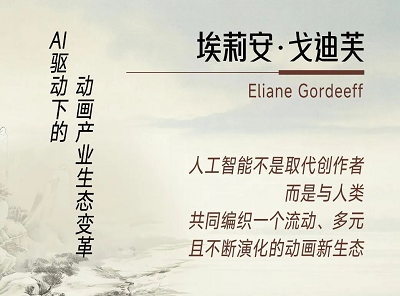
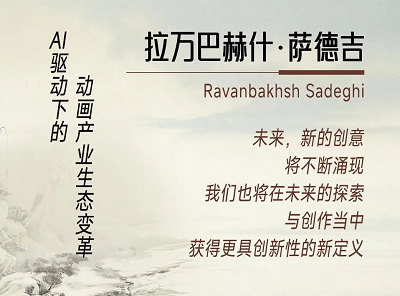
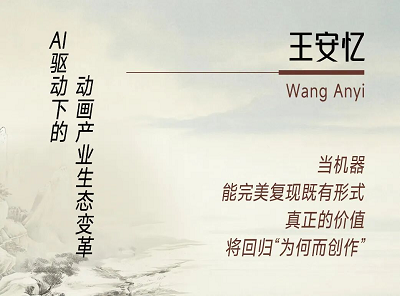
The golden sentence of the guest of the keynote report
The keynote report of this seminar deeply outlines the current situation and future direction of the animation industry driven by AI. It not only provides a platform for professionals in the industry to communicate and collide ideas, but also allows animation practitioners from different countries to share experiences and discuss coping strategies together. It also points out the direction for the development of the animation industry from a more forward-looking perspective, and inspires practitioners to stick to the original intention of creation while embracing technological change and The essence is to promote the high-quality and sustainable development of the animation industry in the AI era.