On the afternoon of November 21, as a core event of the "Animation Without Boundaries · Intelligence Shapes the Future" Animation & Comics Creation Exchange Week, the seminar themed"How Education, Creation and Curation Jointly Define the Future of Animation"was held at Jilin Animation Institute. A key segment of the seminar, the "Roundtable Dialogue," invited experts from home and abroad to conduct in-depth discussions around "Animation Development from a Multicultural Perspective." The guests included:Masa Udović, Founder of Luma Pictures (Croatia) and Director of Animafin Animation Festival;Claudio Roberto, Professor at Jean Piaget Professional Training School (Portugal) and Animation Producer;Ma Tianrong, Associate Professor at Century College, Beijing University of Posts and Telecommunications;Zhou Zhou, Organizer of the "Fifty-Six Moons" Western Digital Animation & Comics Festival and Director of the Animation Department, School of Art, Southwest Minzu University (moderator of the roundtable);Yang Chenxi, Associate Professor at the School of Film, China Academy of Art.

Masa Udovićpointed that, despite Croatia’s small size, it has fostered a unique creative ecosystem centered on short films. She emphasized that short films are crucial as they carry creators’ most authentic and personal expressions. "The value of animation lies not in technology, but in sincerity, individuality, and independent perspectives," she noted. In animation festival evaluations, technology is not a decisive factor. Her core criteria for judging works are: first, originality; second, whether the visual language remains compelling when stripped of music and sound effects—"A good animation should move people even in silence." She advised students to reduce reliance on tools, especially amid the popularity of AI, and return to the essence of creation: "Tools only assist, not replace thinking. Works should start from basic media, maintaining a keen, simple, and genuine creative impulse." She stressed that honesty and curiosity are the most important qualities for animation creators.
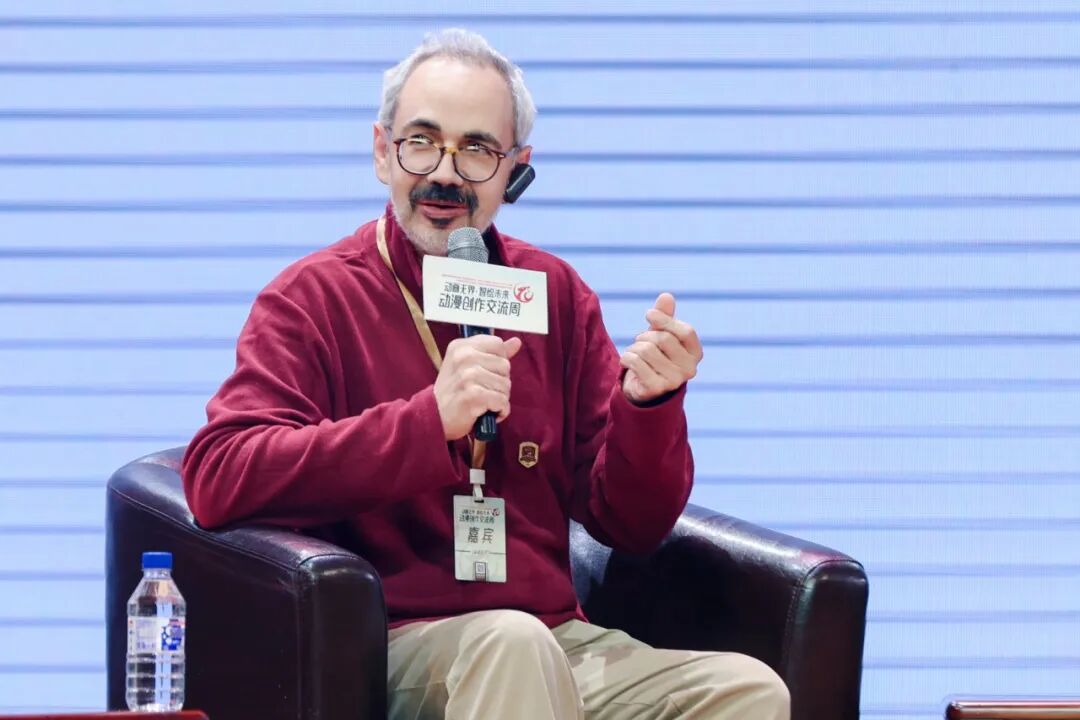
Claudio Robertostated that understanding history is vital for any country’s cultural industry, and personal unique experiences play a significant role in animation production and industrial development. He urged Chinese students and the animation industry to adopt "Chinese approaches" to creation, showcase cultural uniqueness and essence, and draw more from cultural perspectives. Regarding evaluation standards—a core element in animation education and festivals—he argued that uniform criteria are difficult to establish due to the diversity of technical presentations, artistic expressions, and work forms. "Animated films carry creators’ personal feelings and high artistic value; the discussion on evaluation standards has always been a focus of the industry," he said. "There is no fixed answer, as works involve extensive personal expressions that cannot be simply compared. The core consideration is whether a work touches people’s hearts and resonates deeply." Facing technological waves like AIGC, he recommended students prioritize foundational training such as hand-drawing to build muscle memory and solidify creative capabilities before learning AIGC.
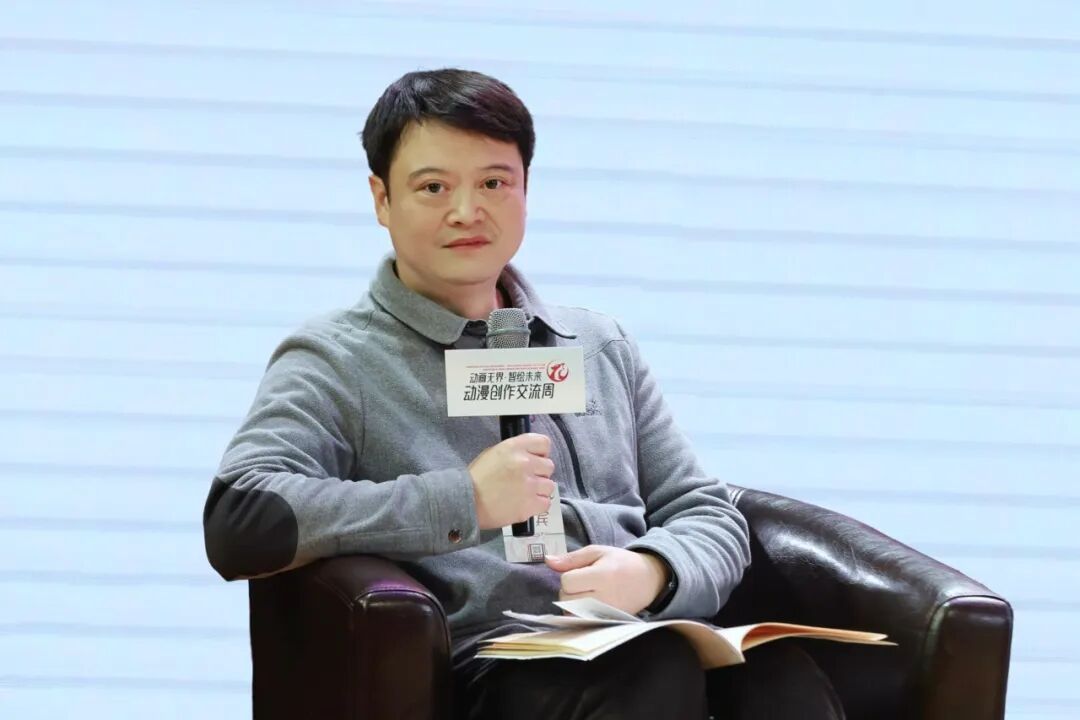
Ma Tianrong's speech
Ma Tianrongsaid with rigorous logical thinking as his core, he proposed that animation possesses dual attributes of art and technology, and its essence lies in ideological expression. He prefers conveying ideas through language, programming, and tools rather than traditional hand-drawing, advocating that art should serve as a carrier for ideological communication to highlight animation’s intrinsic value as an expressive medium. Quoting the Chinese proverb "In literature, there is no absolute first; in martial arts, there is no second," he emphasized that there are no unified evaluation standards for animation. "The core criterion is whether the work accurately expresses the creator’s intent. A work that aligns with its inherent nature and conveys the creator’s original aspiration is a high-quality one." Regarding AI, he advocated an open yet cautious attitude: "Technology is a new tool, not a disruptor. AIGC should enhance artistic expression, not become a shackle that constrains the essence of art."
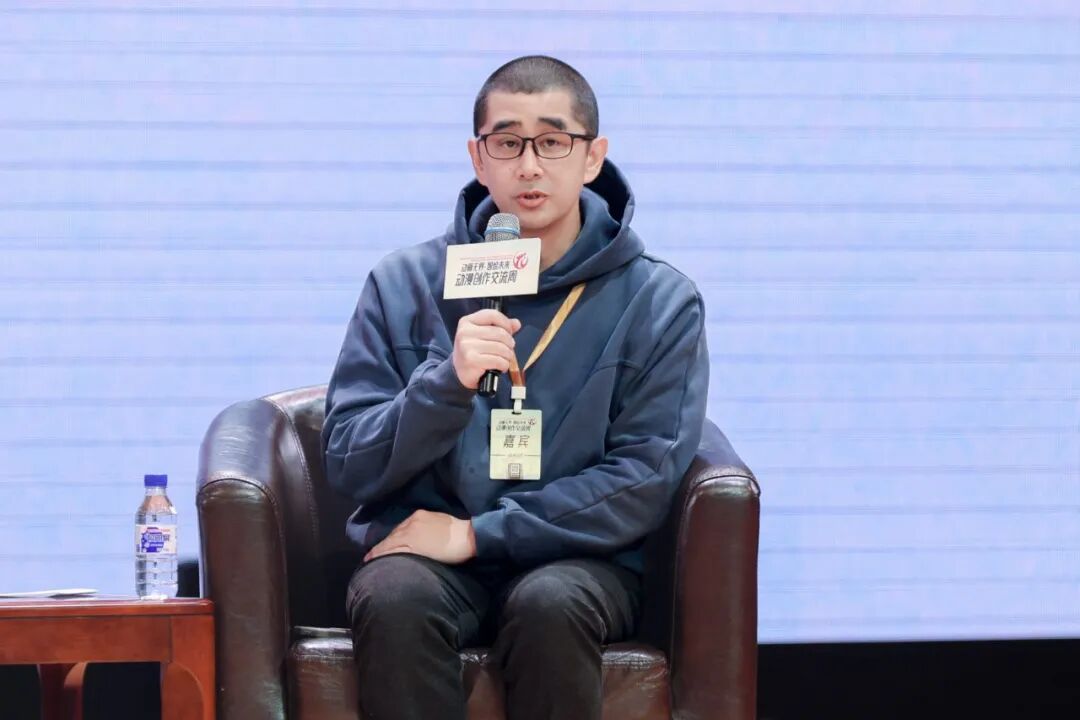
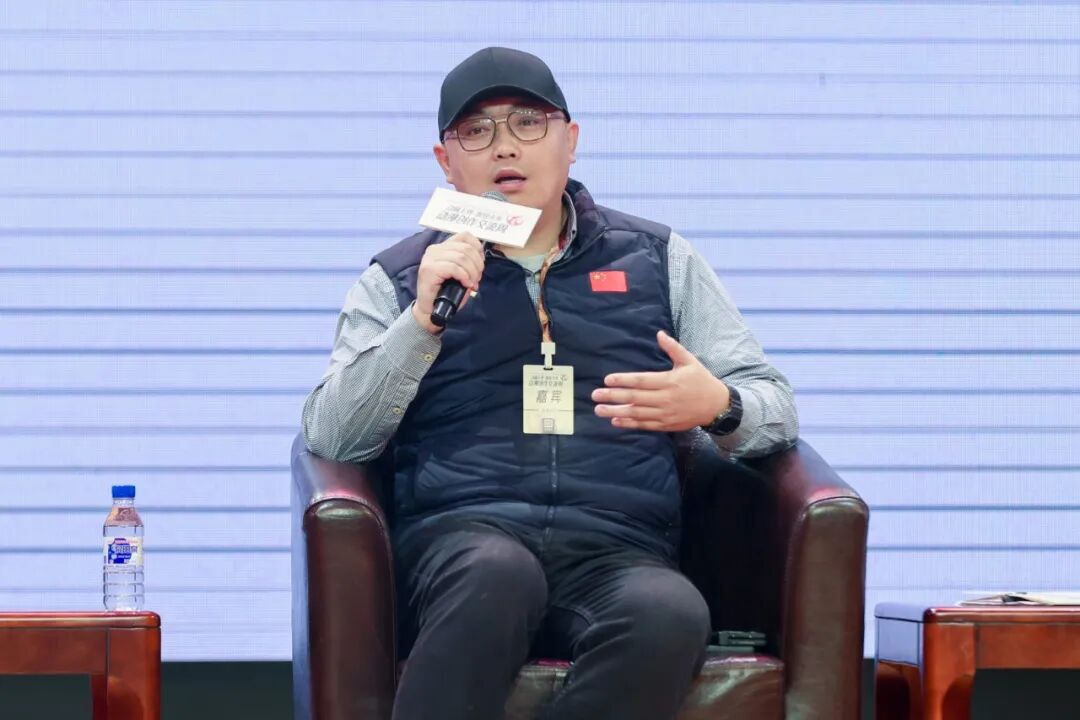
Yang Chenxi's speech
Yang Chenximentioned that focusing on Chinese animation education, creation, and history, he pointed out that the core of animation teaching lies in promoting "authorship." He suggested leveraging fine arts discipline foundations, integrating interdisciplinary resources for collaborative creation, and adopting practical, interdisciplinary teaching models that connect students with industry professionals to inherit the tradition of collective creation. "Animation teaching research and technological development should uphold an inclusive and open attitude," he added. From a historical perspective, he noted that animation is an imported art form in China, and Chinese animators have been exploring "the inherent form of Chinese animation" for a century. He proposed that Chinese animation should be rooted in local perspectives, focusing on the creation and evaluation of elements such as artistic forms, sound, and music. He emphasized the concept of "looking far by reflecting on the past": "Only by returning to history can we more clearly perceive the future direction of Chinese animation."
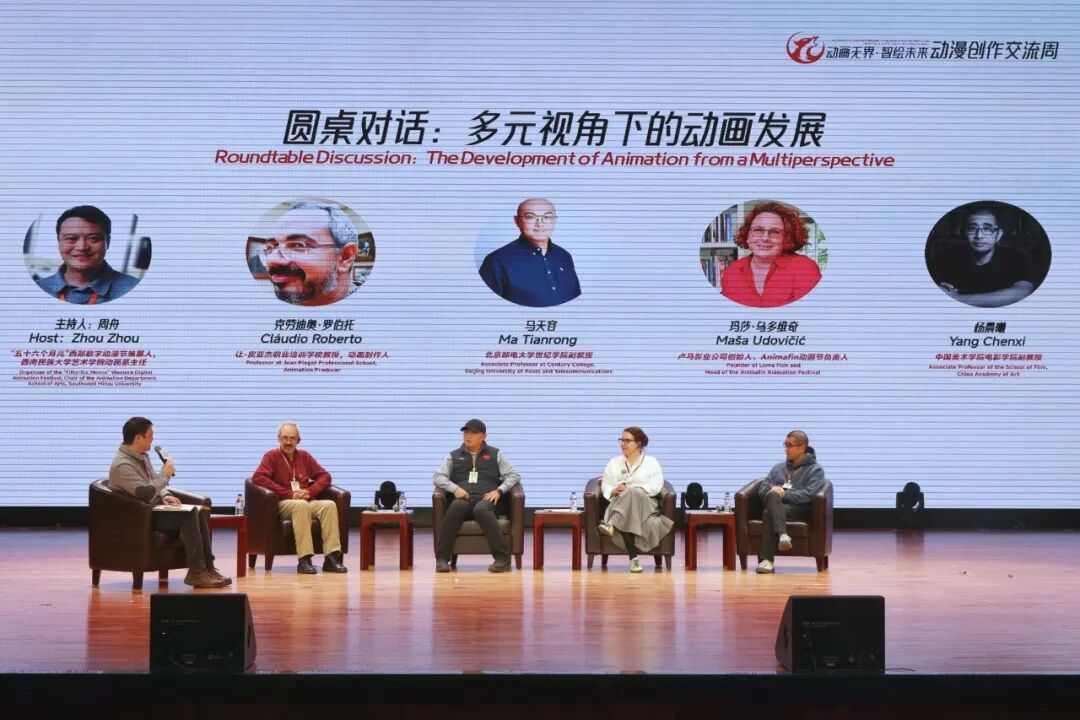
Roundtable dialogue site
The roundtable brought together experts from diverse backgrounds, offering rich and multicultural perspectives on animation development. Discussions on cultural inheritance, creative concepts, technological application, and evaluation standards highlighted the industry’s broad development space and unlimited potential. In the wave of globalization, such exchanges and collisions of diverse viewpoints will undoubtedly inject new vitality into the vigorous development of world animation and drive the art form to new heights.