On April 24, the "Future of Light and Shadow" Film Technology Unit Parallel Forum of the 16th Beijing International Film Festival was successfully held at Langyuan Station, Beijing. The forum was guided by the Propaganda Department of the CPC Beijing Municipal Committee (Beijing Municipal Film Administration) and the Beijing International Film Festival Organizing Committee. It was jointly hosted by Jilin Animation Institute, Shandong University of the Arts, and the Center for Film, Television, and Dramatic Arts at Peking University.

Themed "Practice and Theory of Film-Game-Animation in the Era of AI and Media Convergence," the forum gathered experts and scholars from academia, industry, and education. It focused on the profound reshaping of film, game, and animation forms by cutting-edge technologies such as Artificial Intelligence and game engines. Participants discussed industrial practice, creative mechanisms, and theoretical construction, exploring the transformation and development of "Grand Cinema" industrial aesthetics within the context of media convergence. Key attendees included Liu Xin, Vice Chairperson and Vice President of Jilin Animation Institute; Chen Xuguang, Director of the Center for Film, Television, and Dramatic Arts at Peking University, and Dean and Chief Expert of the Institute of Film-Game-Animation Industrial Aesthetics at Jilin Animation Institute; and Li Zhongqiu, Board Member and Vice President of the International Animated Film Association (ASIFA) and Vice Dean of the School of Animation Art at Jilin Animation Institute. Liu Xin and Chen Xuguang delivered opening remarks, while Li Zhongqiu participated in the roundtable discussion.
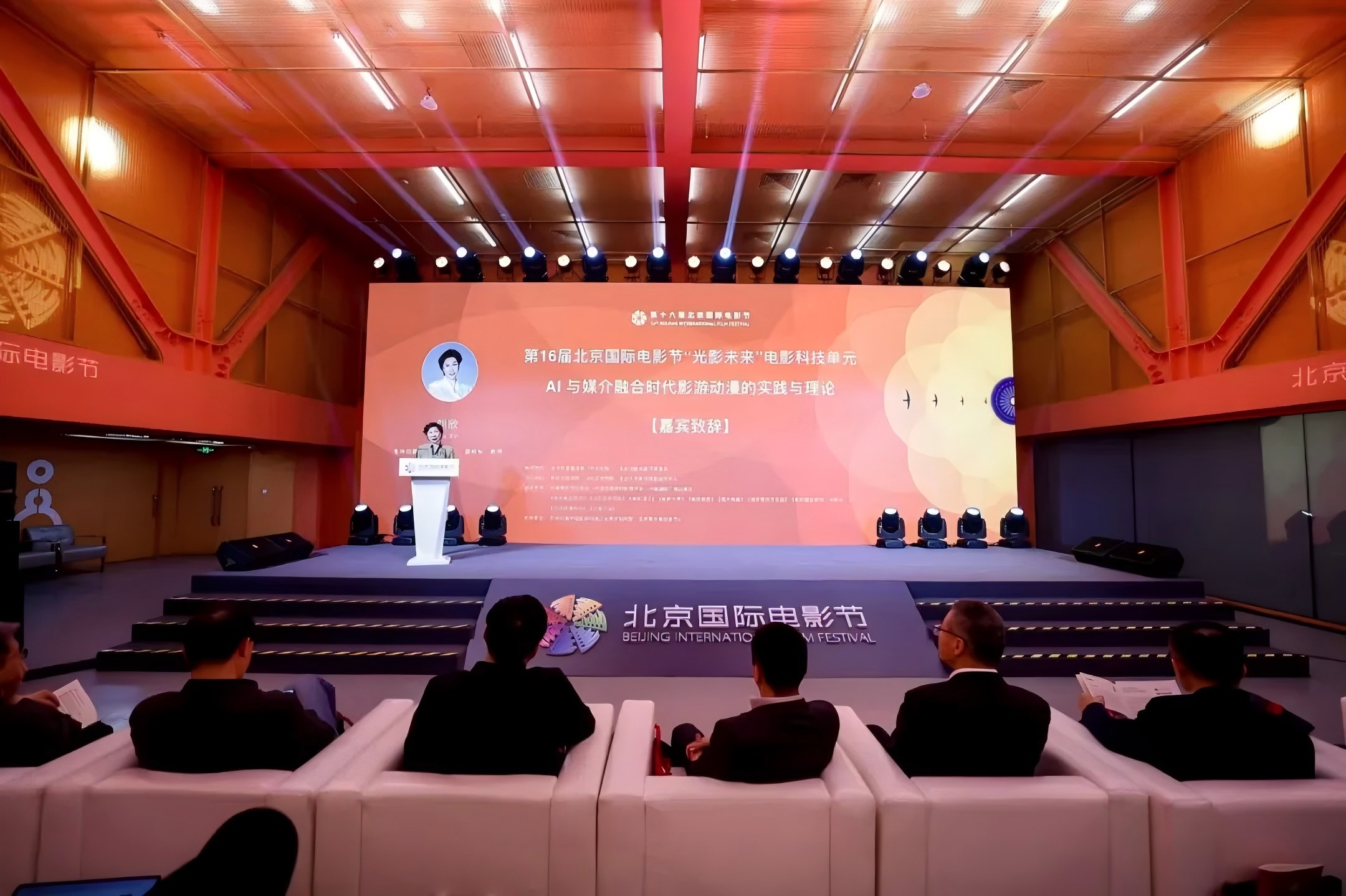
On April 24, the "Future of Light and Shadow" Film Technology Unit Parallel Forum of the 16th Beijing International Film Festival was successfully held at Langyuan Station, Beijing. Guided by the Propaganda Department of the CPC Beijing Municipal Committee (Beijing Municipal Film Administration) and the Beijing International Film Festival Organizing Committee, the forum was jointly hosted by Jilin Animation Institute, Shandong University of the Arts, and the Center for Film, Television, and Dramatic Arts at Peking University. Themed "Practice and Theory of Film-Game-Animation in the Era of AI and Media Convergence," the event convened leading experts from academia, education, and industry to explore how AI and game engines are reshaping the landscape of film, gaming, and animation. Discussions centered on industrial practice, creative mechanisms, and theoretical frameworks, specifically focusing on the transformation of "Grand Cinema" industrial aesthetics within a convergent media environment. Key attendees included Liu Xin, Vice Chairperson and Vice President of Jilin Animation Institute; Chen Xuguang, Dean of the Institute of Film-Game-Animation Industrial Aesthetics at JAI; and Li Zhongqiu, Vice President of ASIFA.
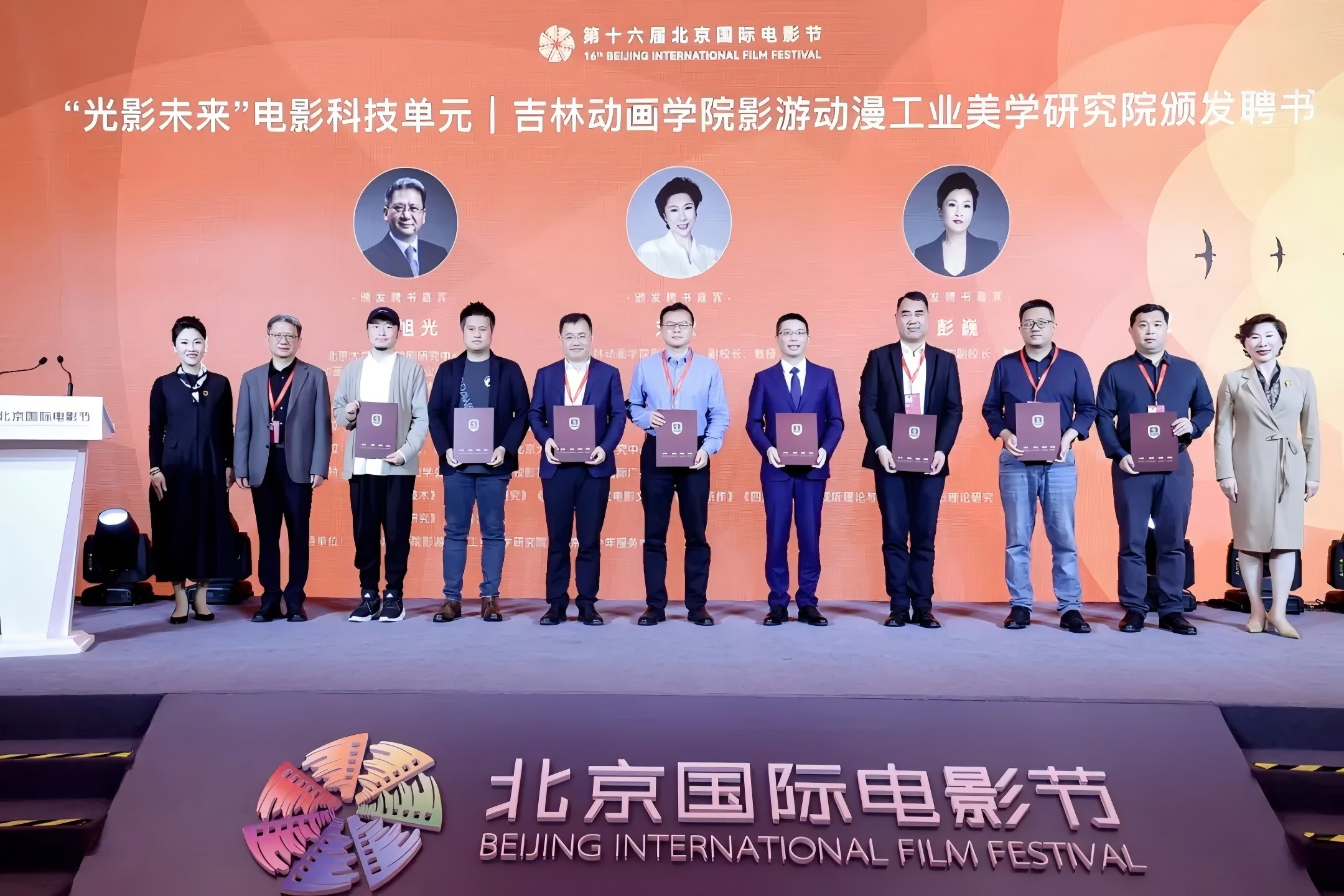
A highlights of the forum was the official appointment ceremony for the first cohort of research fellows of Jilin Animation Institute's Institute of Film-Game-Animation Industrial Aesthetics. A total of 15 distinguished scholars and industry leaders were appointed, including Ding Yaping (President of the China Association of Higher Education's Film and TV Council), Sun Lijun (Dean of the China Animation Research Institute), and Zhang Wei (Standing Vice President of the China Film Critics Association), alongside prominent professors from Peking University, Beijing Normal University, and the Communication University of China. Liu Xin and Chen Xuguang jointly presented the appointment letters to the experts. This expansion of the Institute’s expert team signifies a major step forward in its organizational structure, providing a robust intellectual foundation for advancing academic research, industry-education integration, and industrial practice in the fields of film, games, and animation.
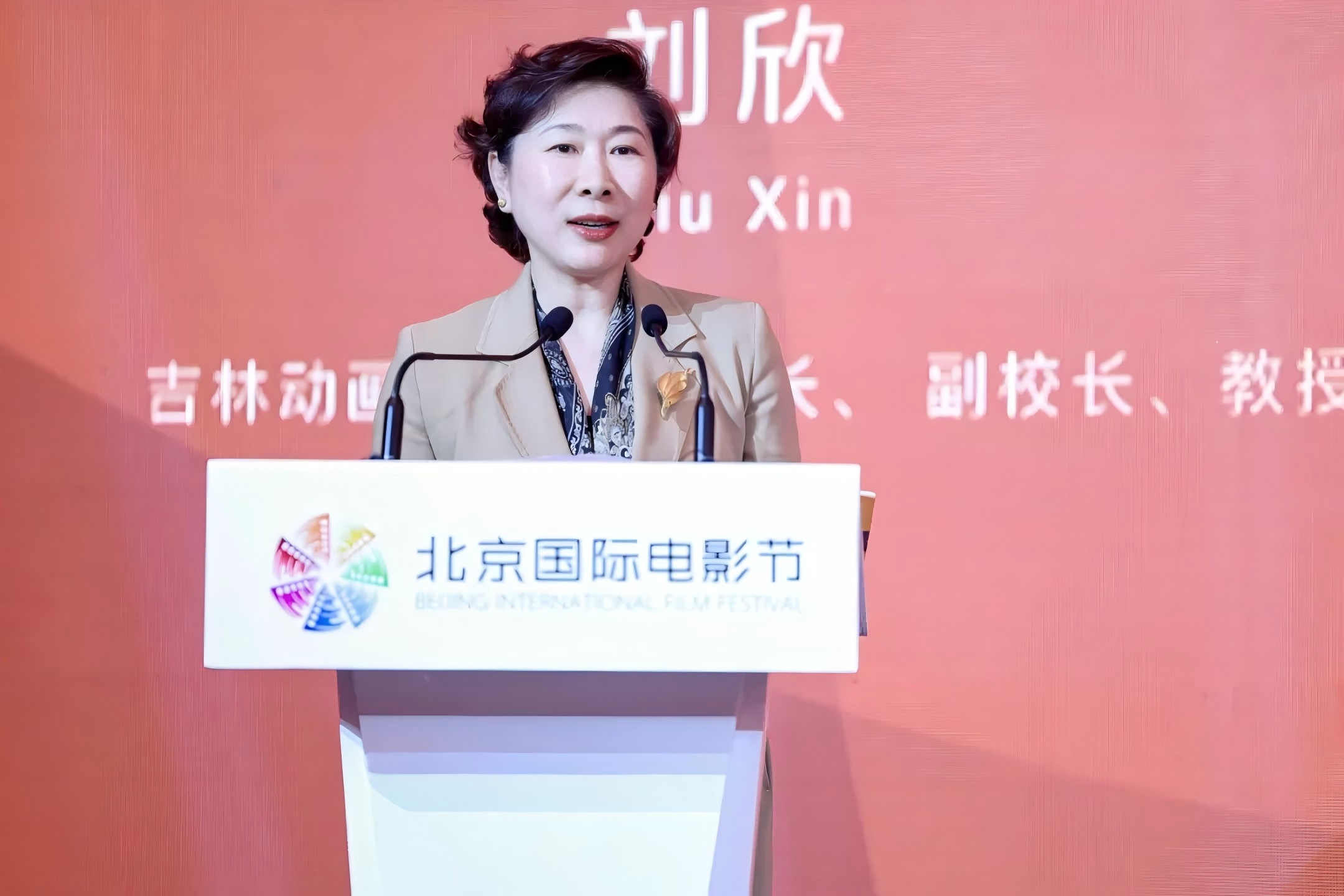
During his opening remarks, Chen Xuguang reviewed the three-year partnership between the Center for Film, Television, and Dramatic Arts at Peking University and the Beijing International Film Festival in hosting the "Future of Light and Shadow" Film Technology Unit. He noted that the forum’s focus has expanded from AI to virtual production and the convergence of film, games, and animation—a progression that embodies the forward-looking and exploratory spirit of Peking University. Professor Chen emphasized that launching the Institute of Film-Game-Animation Industrial Aesthetics at the Beijing International Film Festival was a timely and strategic move. He called for a concerted effort to unite academia and industry, focusing on AI-empowered media convergence, discipline construction, and industrial practice to drive the field forward.
The second roundtable session, moderated byLiu Qiang, featured a deep-dive dialogue amongZhang Ali, Zhu Feng, Shi Chang, Li Lei, Yin Zhaojiu, and Shao Meng. The panelists addressed the theme of "Film and Television Content Production and Cultural Innovation under the Generative Wave," exploring how to maintain cultural roots and achieve genuine content innovation amidst rapid technological transformation. The participating experts reached a consensus that the generative AI wave is irreversible. They emphasized that film and television practitioners, as well as educators, must embrace these new technologies while simultaneously strengthening cultural subjectivity. By adhering to the "content is king" principle and prioritizing the cultivation of interdisciplinary, versatile talents, the industry can find a path to true innovation within the dialectic of "change" and "constancy."
The forum also featured a series of launches for new books, strategic projects, and upcoming events. In response to the transformative impact of AI, the participants concluded that film and television creation and education must uphold fundamental principles while pursuing innovation, further deepening the integration of film, games, and animation alongside talent cultivation. Moving forward, theInstitute of Film-Game-Animation Industrial Aestheticswill take this event as a starting point to advance pragmatic research, with the goal of fostering deeper collaborations to drive the innovative development of Chinese cinema.Jilin Animation Institute (JAI)remains committed to gathering top-tier expertise and continuously refining its talent training systems for the AI era. By doing so, the institute aims to contribute "JAI wisdom" and "JAI strength" to the high-quality development of China’s film-game-animation industry and its international cultural communication.