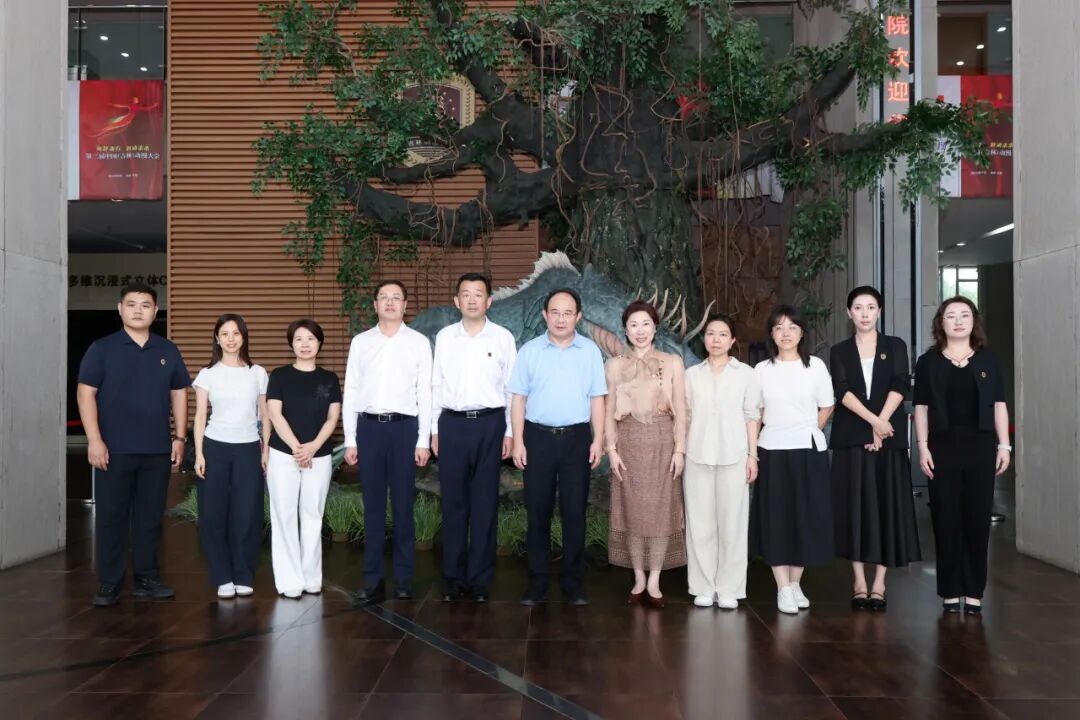
On August 24, Mao Yu, Deputy Director of the National Film Administration responsible for its day-to-day work, led a delegation on a research visit to Jilin Animation Institute. Yue Wu, Party Secretary and government supervisor of the Institute; Liu Xin, Vice Chair of the Board; and Liu Zhenhua, Executive President, welcomed the delegation.
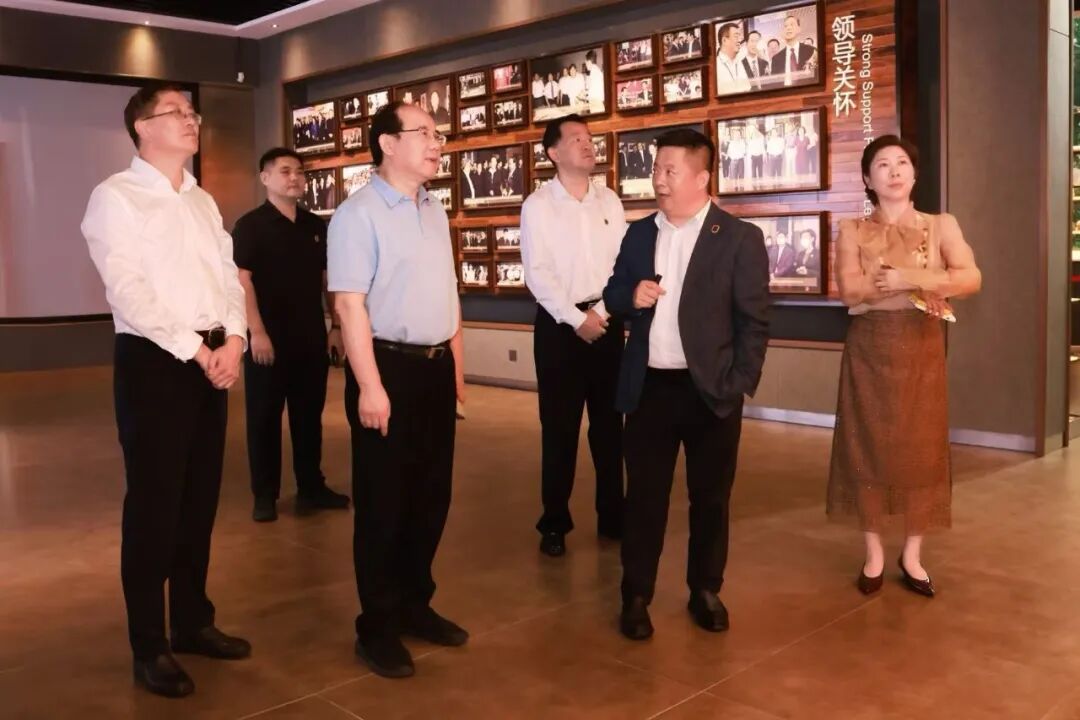
Exploring the Institute’s Development and Creative Work
The delegation visited the large-scale intelligent bionic sculpture Xi, one of the mythical beasts from Classic of Mountains and Seas; the Institute’s history museum; an exhibition of original works from classic animation and comic books; an exhibition of integrated education, research, and industry achievements; and a retrospective exhibition on film. The visits offered an up-close look at the Institute’s history, talent development model, and creative achievements, including practical work in animation production, IP development, and intelligent imaging. The delegation also examined the Institute’s approach to animation education and industry–education integration.
Guidance on Talent Development and IP Expansion
During discussions, Mao offered guidance on the Institute’s development of animation talent and its links with industry. He said the Institute should respond to the needs of the full domestic animation and film industry chain by further strengthening coordinated talent development in brand marketing, and sustain these efforts to build a strong talent base for improving the international competitiveness of Chinese film and television brands.
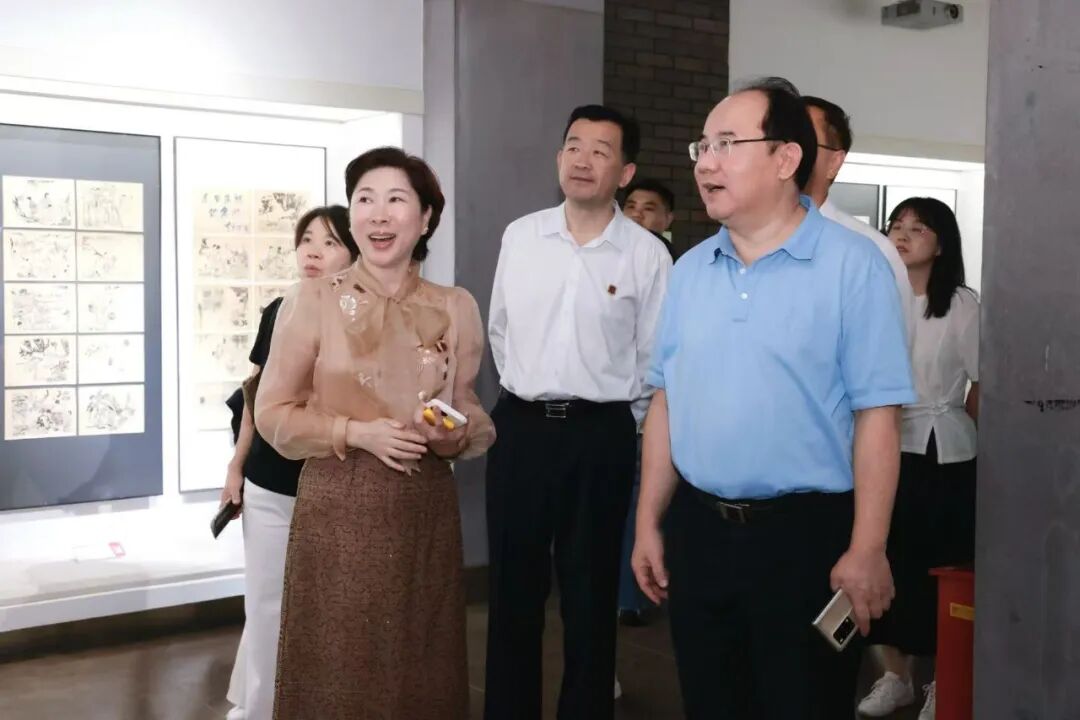
Mao noted that the animation sector has a solid reserve of creative talent, and that animation should look beyond box-office performance. He stressed the importance of realizing and expanding the value of intellectual property (IP), including through the development of derivative products. He encouraged the Institute to cultivate versatile professionals who combine creative and industry perspectives, and to connect animation production with IP development from the early stages of a project. Character design, he said, should begin during project planning, with future merchandise and other derivative products taken into account. He also emphasized the important role of IP development in the growth of the animation industry.
Mao said Chinese animated films are well positioned to seize an opportunity for rapid development. China’s animation technology has reached a high level, while the country’s rich traditional culture—including stories from the Classic of Mountains and Seas—offers an abundant source of material. Finding ways to turn this heritage into screen works that reflect the times and resonate with audiences is an important task for the industry. He recognized Jilin Animation Institute’s strong foundations, distinctive strengths, and concentration of professional talent, and expressed hope that the Institute would seize new opportunities, produce more high-quality work, and achieve further development.
Advancing High-Quality Development
The delegation’s guidance points to a clear direction for developing talent across the digital cultural and creative industries. Jilin Animation Institute will study and implement the recommendations, build on its integrated education, research, and industry model, develop works inspired by China’s fine traditional culture, and strengthen students’ understanding of the full IP value chain. The Institute will continue preparing versatile, high-caliber professionals for China’s animation and film industries and contribute to the high-quality development of Chinese animation.