In the era of intelligent imagery, new‑media storytelling reshapes lifestyles. Interactive thinking and participatory culture have become mainstream aesthetics, blurring boundaries between industry and media, content production and communication. Future visual creation needs to align with the spirit of the times and adopt multi‑sensory narrative to build deep emotional connections with audiences.
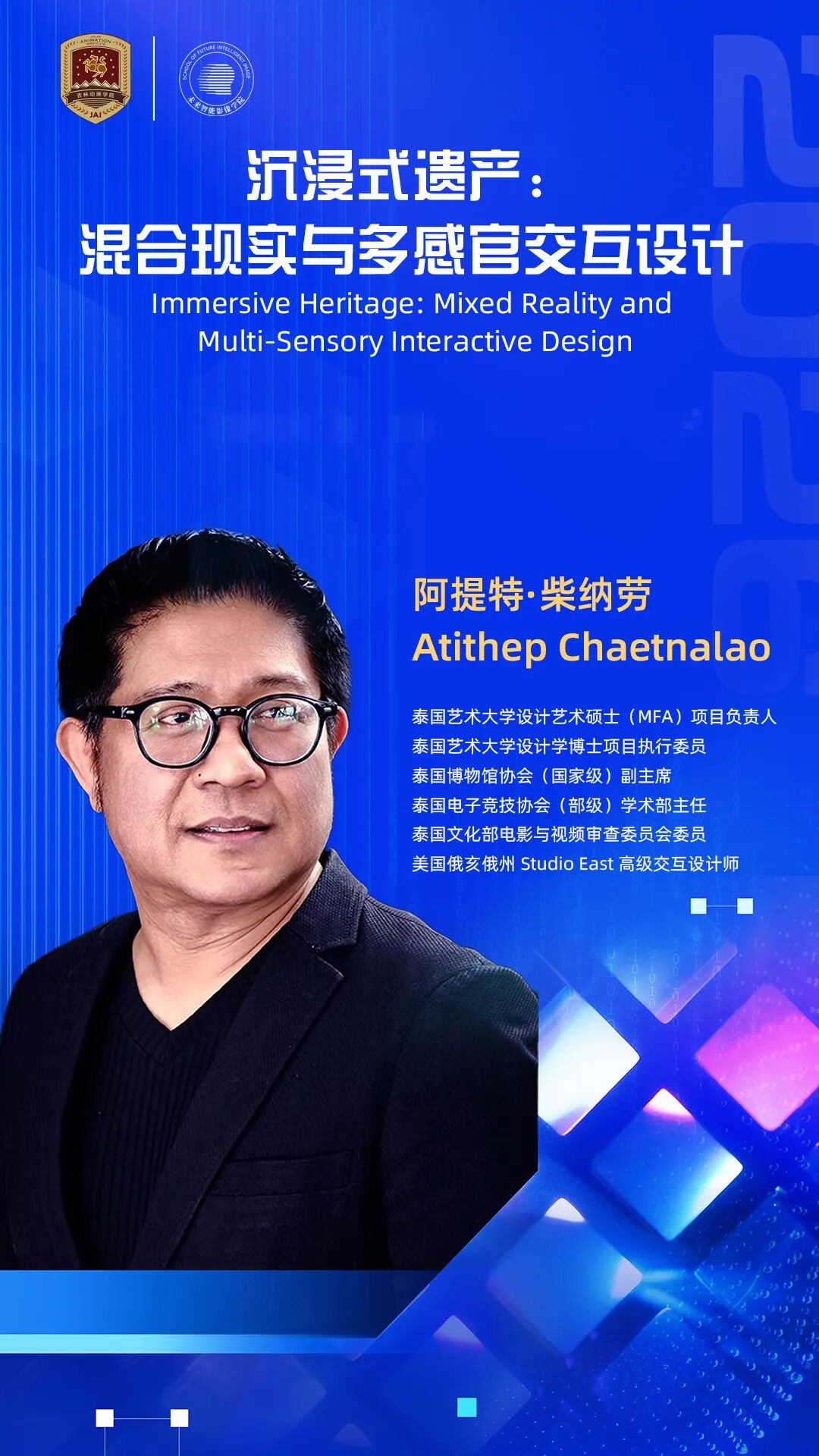
Recently, Dr. Atithep Chaetnalao, Programme Director of the Master of Design Arts at Silpakorn University, Thailand, delivered a lecture titled Immersive Heritage: Mixed Reality and Multi‑Sensory Interaction Design at Jilin Animation Institute. Around 150 teachers and students majoring in Animation, Art and Technology attended the event. Executive President Liu Zhenhua awarded Dr. Atithep Chaetnalao a visiting professor certificate.
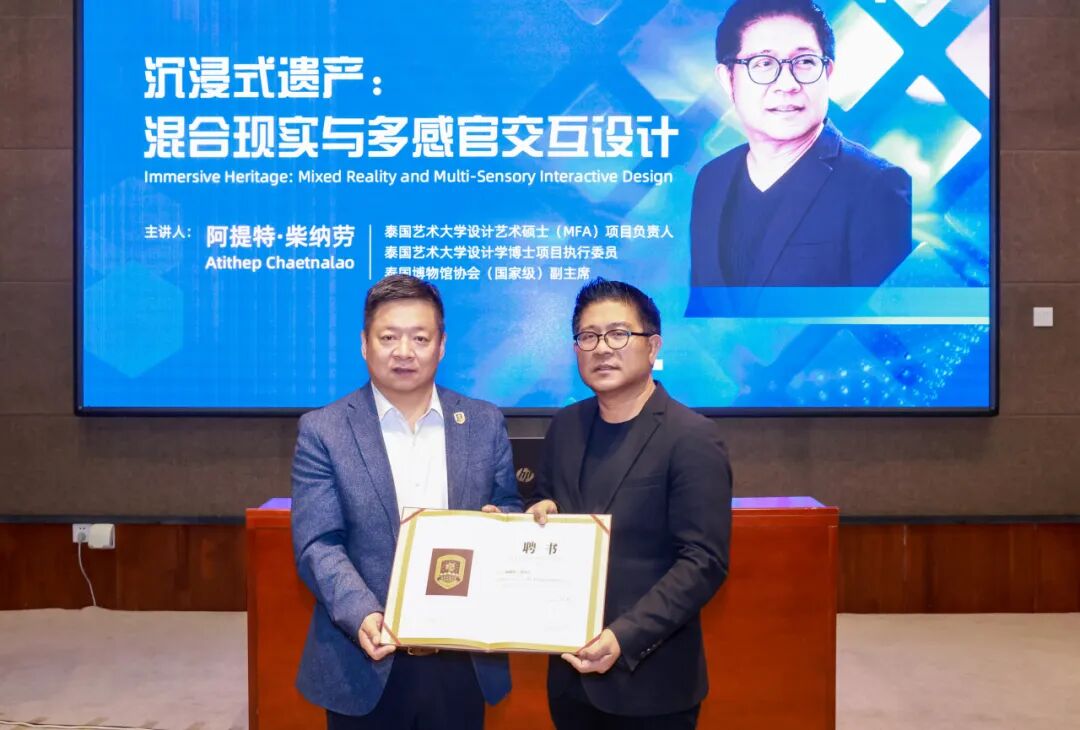
Awarded visiting professor certificate
With 21 years of experience in digital media, interaction and visual communication design, Dr. Atithep centered his sharing on “revitalizing history in the digital realm”.
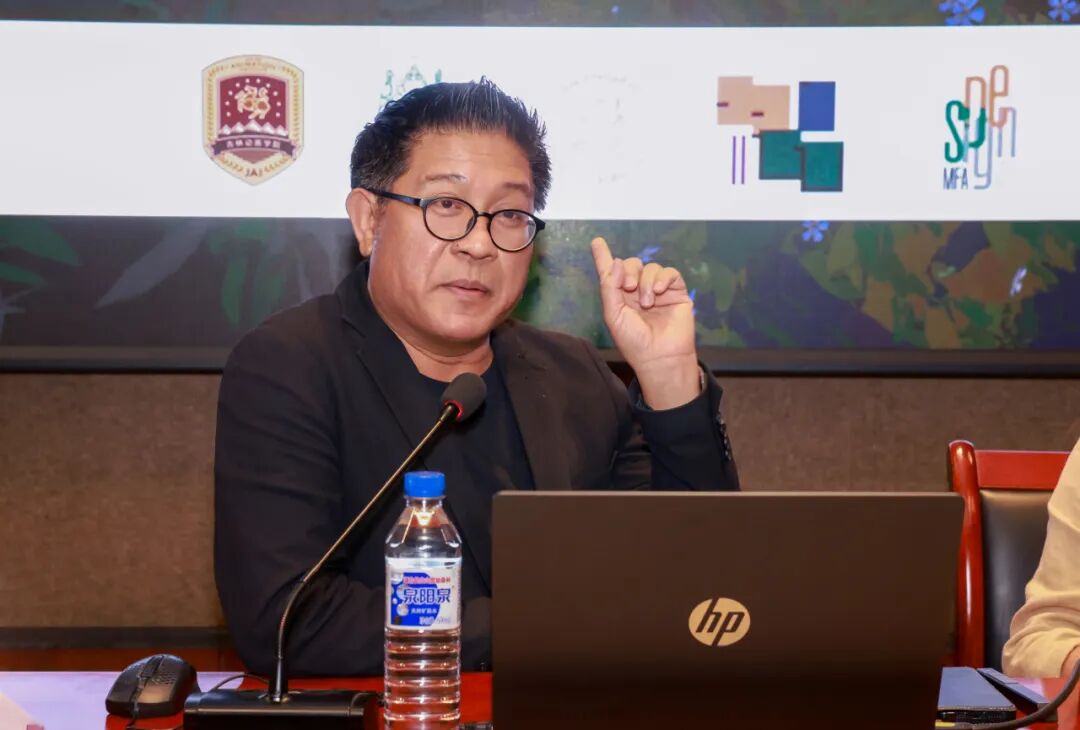
Academic Lecture
He stressed that technology for cultural heritage should focus on fitting contextual needs to make history tangible, rather than showing off technical effects. Drawing on his decade‑long practices including the 2014 AR exhibition at U Thong National Museum, interactive installation Flower Language, MR museum projects restoring fragmented Buddha statues, and a history‑themed mobile game encouraging museum visits, he illustrated that meaning, not costly technology, lies at the heart of creation.
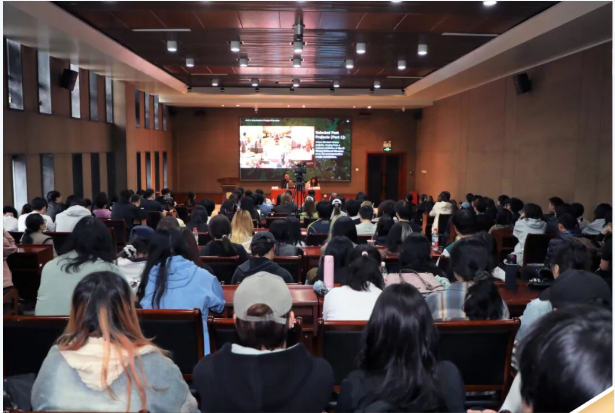
Academic Lecture
During Q&A, he noted Unity as the primary development tool for MR multi‑sensory projects, while 3D software selection should suit individual strengths. He summarized four pillars for quality cultural heritage projects: user research to identify real demands, idea generation and expert/user review, balanced integration of technology and aesthetics, and iterative prototyping via user testing. For young designers, he advised: “You do not need to master everything, but know your core strengths.” Differentiated competitiveness and complementary teamwork enable sophisticated, meaningful creative works.
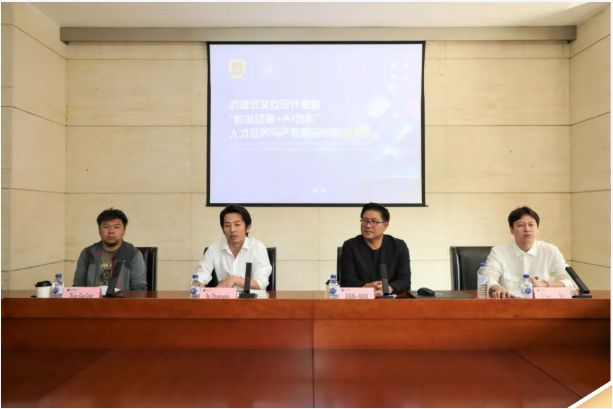
Seminar's site
At the seminar, Dr. Atithep discussed with faculty. He remarked that while technology transforms creation, education prioritizes nurturing human creativity and critical thinking. True integration requires deep synergy of content, technology, scenario and industry. Cross‑major, interdisciplinary and cross‑cultural collaboration through courses and projects helps explore innovative talent training models for shared future development.
From static displays to multi‑sensory immersion, from relic preservation to emotional engagement, this exchange fostered sincere cross‑cultural dialogue and artistic resonance. Continuous innovation enables intelligent visual art to expand cross‑border communication via multi‑sensory storytelling.
Moving forward, Jilin Animation Institute will further international exchanges in digital art and visual creation, unlock cross‑cultural innovation empowered by emerging technologies, produce internationally influential artworks, and contribute to the prosperity of cultural industries.