Recently, as part of the Master Talk on Comics academic series hosted by Jilin Animation Institute, three industry specialists delivered keynote speeches: Nicolas Grivel, French literary agent and senior editor; Alia Ludier, French comic artist; and Zhou Xiyue, Deputy Director of the Comic Art Committee under the China Artists Association. Teachers and students from he School of Comics attended the event for interactive exchanges.
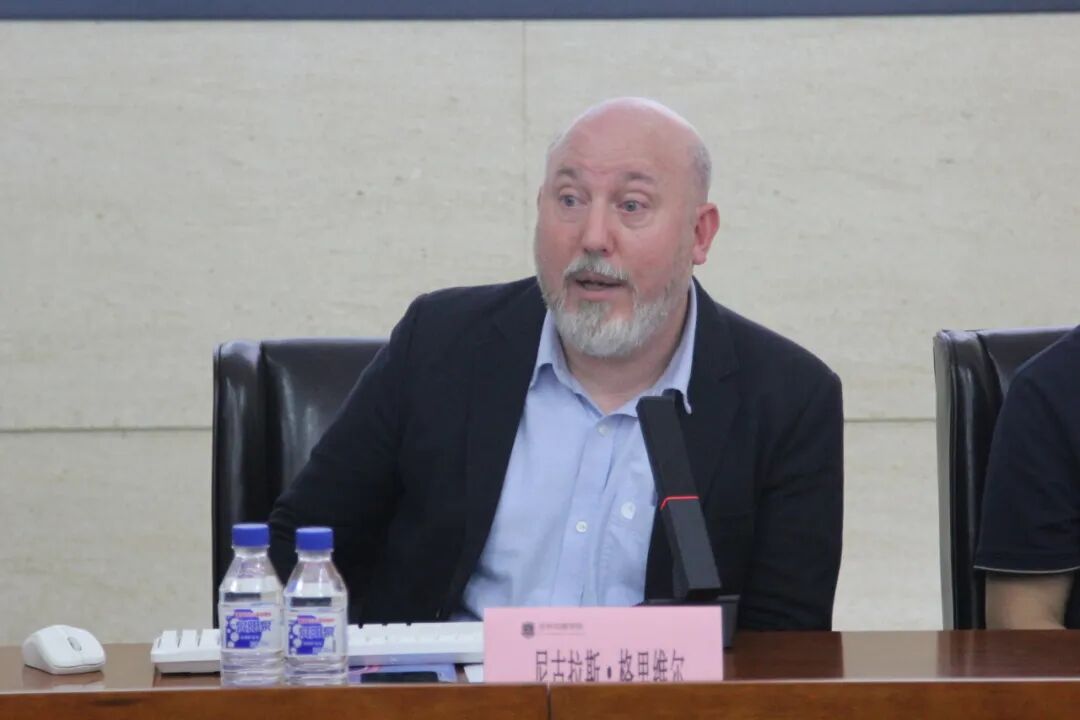
Nicolas Grivel's presentation
Nicolas Grivel kicked off the first presentation with the topicSino-French Friendship Within Panels: The History of Chinese Comics in France.He began by introducing his professional career and hometown, then elaborated on the roles and value of comic editors from an editorial standpoint. He stated that an editor is not merely the “first reader” of a work, but also a collaborator to creators. An editor’s work runs through the entire chain of comic creation and dissemination, covering topic planning, content refinement and international collaboration.
When talking about Sino-French comic cooperation, Nicolas cited his collaboration with Chinese comic artist Nie Jun, detailing the whole process from conceptual alignment to joint creation. He remarked that their partnership represents far more than a cross-border creative practice — it embodies Sino-French friendship. “We speak different languages and grow up in distinct cultural contexts, yet our passion for comic creation and pursuit of emotional resonance are identical.” He argued that the core of Sino-French comic collaboration lies not in superficial stylistic fusion, but in using comics as a medium to convey shared feelings that transcend language and culture.
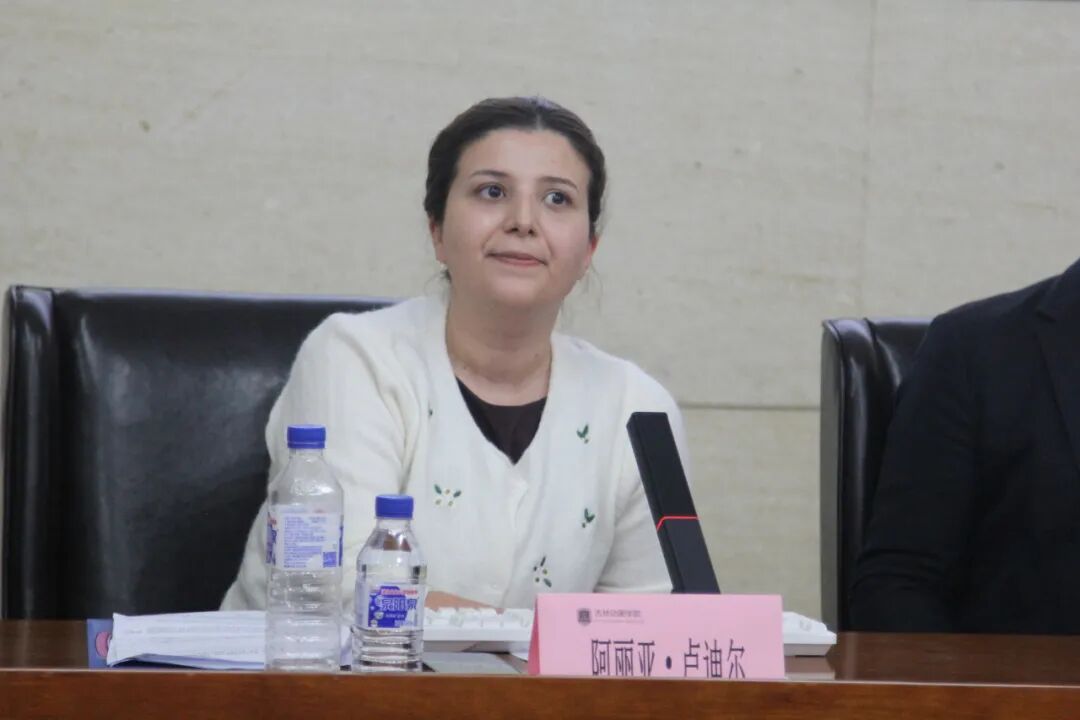
Alia's presentation
Alia Ludier then gave her keynote speech titledTelling Social Stories Through Fantasy Works. A frequent guest speaker at the institute, she is well-known to faculty and students. She first recounted her past cooperation experiences with Jilin Animation Institute, then drew on her own fantasy comic works to share creative insights across multiple dimensions, including conceptual planning, scene design, symbolic metaphor and character building.
Alia explained that though her stories are set in fantasy worlds, their core always addresses real social issues. “Fantasy is not an escape from reality; it is a more inclusive and imaginative way to depict the world we live in.” Using scene design details from her comics, she illustrated how composition, color palettes and atmospheric styling convey narrative emotion and themes. When discussing symbols and metaphors, she demonstrated how recurring imagery carries profound subtext, prompting readers to reflect on real-life matters amid fantasy storytelling.
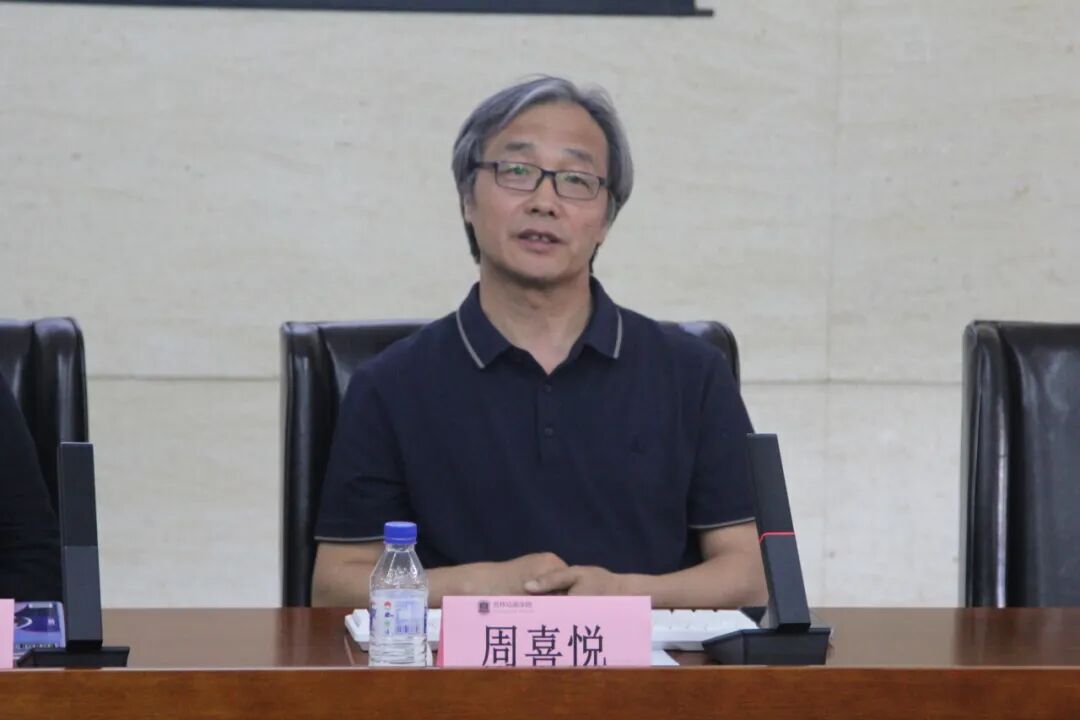
Zhou Xiyue's presentation
Zhou Xiyue delivered a forward-looking, in-depth presentation entitledArtistic Expression in the AI Era. He traced a century of evolution in robotics and artificial intelligence, outlining the shift from early sci-fi imagination to today’s real-world technological applications. He then explored AI’s impact on comic creation, as well as the inherent value and future prospects of traditional comics.
He pointed out that AI unlocks new potential for comic production: it can boost efficiency and expand creative boundaries by assisting with sketch drafting, coloring and scene layout. Even so, AI can never replace the core value of human creators. Drawing on the history of traditional comics, he stressed that humanistic care and ideological expression form the foundation of comic art. “Traditional comics function as tools for social critique and emotional communication. Their satire, ideological depth and heartfelt warmth cannot be matched by AI.”
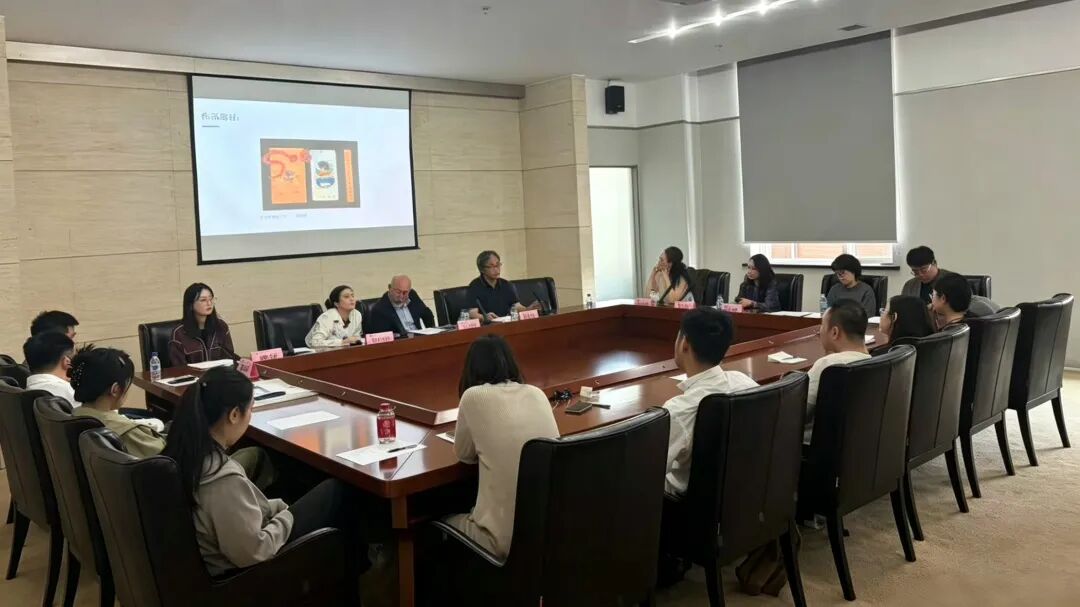
Open discussion session
After the keynote sessions, an open discussion session followed. Faculty and students held in-depth discussions with the guests regarding the international comic market, fantasy storytelling techniques and AI tool application, receiving practical advice rooted in the speakers’ professional experience.
Jilin Animation Institute has long championed cross-cultural exchange in animation and comics. This event continues its legacy of Sino-French comic cooperation and provides a platform for students and teachers to engage with cutting-edge global creative philosophies. Exposure to diverse perspectives broadens creative horizons, intellectual sparks fuel innovation, and bilateral comic cultural ties are further strengthened.
Moving forward, leveraging its robust international partnership resources, Jilin Animation Institute will launch more varied Sino-foreign cultural exchange programs. These initiatives will offer wider creative and career opportunities for faculty and students, supporting Chinese original comics to step onto the global stage.